
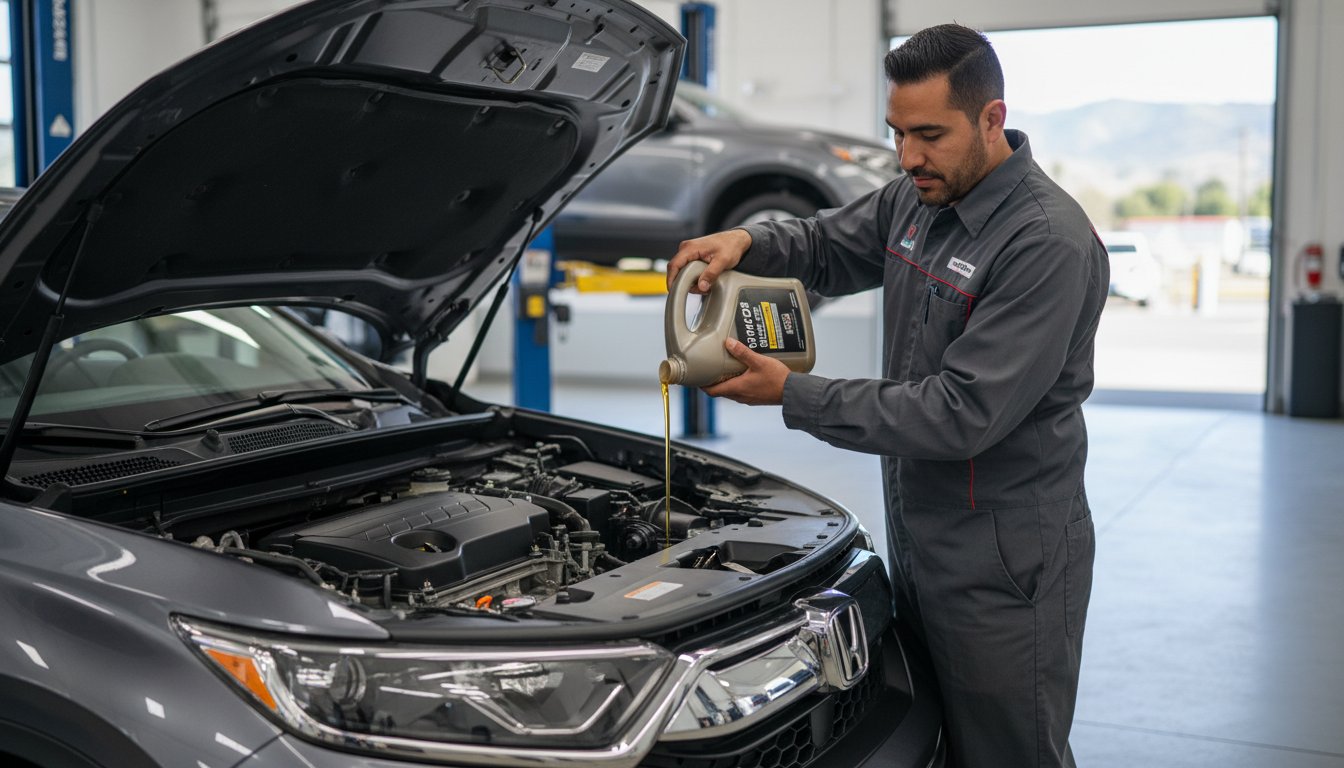
Last July, a Hemet driver watched their maintenance light flicker to life while the outside thermometer hit 108 degrees on State Street. That small icon isn't just a suggestion; it's a vital alert for your engine's survival in our intense Inland Empire heat. You likely understand that a routine Oil and Filter Change is necessary, yet the fear of overpaying or facing a breakdown on a remote canyon road still lingers. It's common to feel overwhelmed by dashboard warnings, but staying ahead of your service shouldn't be a source of stress.
This 2026 guide reveals why professional maintenance is the single most critical task for protecting your Honda's longevity in our unique climate. You'll learn how to lower your long-term repair costs and gain total confidence in your vehicle's reliability. We'll outline a clear maintenance schedule and explain how the Diamond Valley Honda team provides the transparent, expert care your car deserves. By the end of this guide, you'll have a roadmap for keeping your vehicle in peak condition for every mile of your journey.
Key Takeaways
- Learn how Hemet’s extreme heat and "severe driving" conditions impact your engine and why the local climate requires a proactive maintenance schedule.
- Discover why 0W-20 full synthetic oil is essential for 2026 Honda models to ensure peak performance during San Jacinto Valley temperature swings.
- Master the meaning behind your Honda’s Maintenance Minder codes and visual dipstick cues to stay ahead of potential engine issues.
- Find out how a professional Oil and Filter Change at Diamond Valley Honda protects your powertrain while providing a comprehensive multi-point health check.
- See how our factory-trained experts combine world-class Honda engineering with personalized, neighborly service to keep your vehicle dependable for years to come.
Why Regular Oil and Filter Changes Are Essential for Hemet Drivers
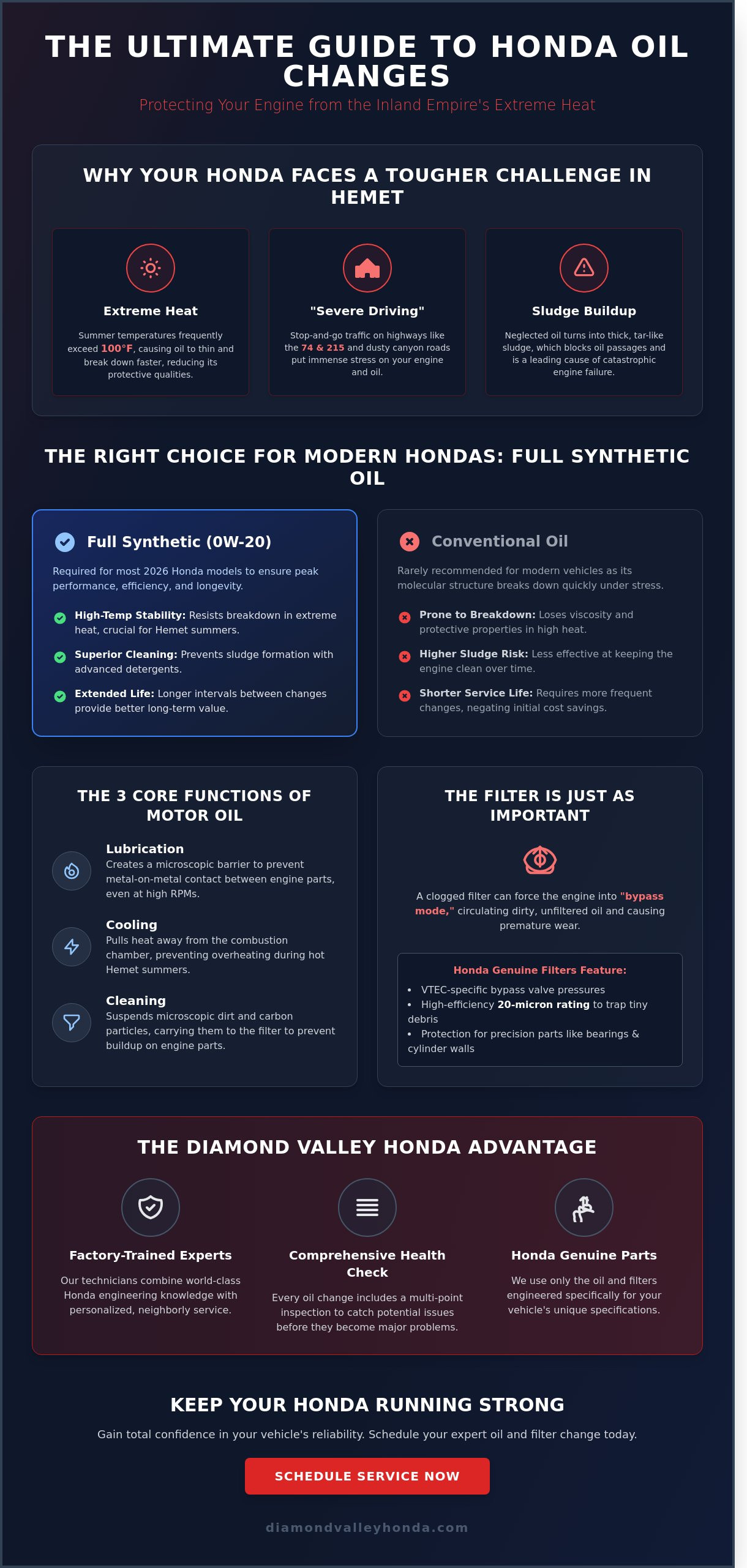
Your Honda engine is a masterpiece of precision engineering, but it relies entirely on a clean supply of fluids to stay healthy. Think of motor oil as the lifeblood of your vehicle. It provides the essential lubrication, cooling, and cleaning properties that allow your engine to operate under the stress of daily commuting. Neglecting a scheduled Oil and Filter Change can lead to "sludge" buildup. This thick, tar-like substance is the leading cause of catastrophic engine failure, as it blocks the narrow oil passages that keep your motor moving. By sticking to a regular maintenance schedule at Diamond Valley Honda, you ensure your car remains dependable for years to come.
Beyond simple protection, fresh oil significantly improves your fuel efficiency. When internal friction is low, your engine doesn't have to work as hard to maintain speed. This leads to better gas mileage and helps you stay compliant with Southern California’s strict emissions standards. Keeping your oil clean is a smart way to save money at the pump while protecting the longevity of your vehicle.
The Three Main Functions of Modern Motor Oil
Understanding the main function of motor oil helps you appreciate why quality matters. First, oil provides thermal regulation. This is vital during Hemet summers when temperatures frequently top 100 degrees for weeks at a time. The oil pulls heat away from the combustion chamber to prevent overheating. Second, it facilitates friction reduction. It creates a microscopic barrier that prevents metal-on-metal contact even at high RPMs. Finally, it manages contaminant suspension. It holds microscopic dirt and carbon particles in suspension, preventing them from settling on engine parts until they can be trapped by the filter.
Why the Filter is Just as Important as the Oil
The oil filter acts as the primary defense against internal scouring. If a filter becomes clogged, your Honda is designed to enter "bypass" mode. This allows dirty, unfiltered oil to circulate through the engine to prevent a total loss of pressure, but it also allows debris to cause premature wear. Honda Genuine Filters are engineered with specific bypass valve pressures that match the requirements of VTEC engines perfectly. These filters feature a high micron-rating, which is a measurement defining the smallest particle size the filter can trap. A standard 20-micron rating ensures that even the tiniest debris cannot damage precision engine parts like bearings or cylinder walls.
Regularly replacing both the oil and the filter ensures that your engine remains clean and cool. Our team at Diamond Valley Honda treats every Oil and Filter Change with the precision your vehicle deserves, using only parts designed specifically for your model's unique specifications.
Synthetic vs. Conventional: Choosing the Right Oil for Your Honda
Most 2026 Honda models require 0W-20 full synthetic oil to maintain their high standards of performance and efficiency. This isn't just a suggestion from the manufacturer; it's a necessity for the precision-engineered components found in modern engines. Synthetic oil offers superior stability during the extreme temperature swings we experience in the San Jacinto Valley. While conventional oil was the standard for decades, it's rarely recommended for modern vehicles because its molecular structure breaks down much faster under stress. This breakdown leads to sludge buildup, which can restrict flow and cause premature engine wear.
The Benefits of Full Synthetic Oil in California
Driving in Southern California involves unique environmental stressors. Long commutes on the 215 or 74 highways generate significant internal heat that can cook lesser oils. Full synthetic oil provides much higher resistance to oxidation during these high-speed trips, keeping your engine clean. It also ensures better flow during "cold" starts. Even though Hemet stays warm, an engine is technically "cold" anytime it sits below its standard operating temperature of roughly 195 to 220 degrees Fahrenheit. Synthetic oil stays fluid at these lower temperatures, reaching critical parts in seconds to prevent friction. These benefits allow for extended drain intervals, providing better value over the life of your vehicle.
Understanding Oil Weight and Viscosity Grades
The numbers on the bottle, such as 0W-20, tell a specific story about how the oil protects your engine. The "0W" represents the oil's flow characteristics in cold weather, while the "20" indicates its thickness at operating temperature. Using the wrong weight is a common mistake that can trigger a "Check Engine" light or reduce your fuel economy by 1% to 2%. To keep your vehicle running at its peak, you can explore our expert automotive maintenance tips for more advice on fluid care and long-term protection.
If your Honda has surpassed the 75,000-mile mark, you might consider moving to a high-mileage blend. These specialized oils contain extra additives and seal conditioners that help prevent leaks in older gaskets. When you visit us for a professional Oil and Filter Change, our team makes sure to properly manage the used oil to keep our local community clean and sustainable. Selecting the correct oil is the most effective way to ensure your Honda remains a dependable partner on the road for years to come. If you're ready for your next service, feel free to view our current service availability and find a time that works for your schedule.
Signs Your Vehicle Is Ready for an Oil and Filter Change
Your Honda is a precision machine that uses a sophisticated onboard computer to monitor its own health. Relying solely on a dated sticker in the window is a thing of the past. If you notice your engine sounds louder than usual or your gas mileage drops by 2 or 3 miles per gallon, your car is likely signaling for help. These subtle shifts in performance often mean your engine is working harder than it needs to because of old, broken-down lubricants.
Decoding the Honda Maintenance Minder System
The Maintenance Minder system uses smart sensors to track engine heat, ambient temperatures, and driving conditions. It doesn't just count miles. If you spend your daily commute idling in Hemet traffic, the system adjusts your oil life percentage faster than if you were cruising on the open freeway. You will see specific codes appear when service is due:
- Code A: This indicates it is time to replace the engine oil.
- Code B: This is more comprehensive, requiring an Oil and Filter Change along with a front and rear brake inspection and adjustments.
- Sub-code 1: This tells you to rotate your tires. We frequently pair this with your oil service to ensure even tread wear across all four wheels.
Physical Symptoms of Degraded Oil
You should pull the dipstick at least once a month to check the fluid level and condition. Fresh oil looks like clear honey. If the liquid appears black, gritty, or smells scorched, it has lost the ability to protect your engine. Driving with dirty oil is a damaging act of neglect that can lead to permanent internal wear or total engine failure.
Watch for blue or gray smoke from the exhaust or a thick burning scent inside the cabin. These signs suggest a leak or that your engine is consuming oil at an unsafe rate. Understanding these dashboard and physical signals is just as vital as knowing what is TPMS for your overall road safety. When you stay ahead of these cues, you protect your investment and keep your Honda running smoothly for years.
Listen for new sounds when you start the car. A healthy Honda engine should hum quietly. If you hear a metallic ticking or a rhythmic knocking, your oil is likely too thin or too low to cushion the moving parts. This lack of lubrication causes friction that generates excessive heat. A professional Oil and Filter Change is the simplest way to silence these issues before they turn into expensive repairs at the shop.
Navigating the Inland Empire: How Local Conditions Affect Your Oil Life
Hemet isn't your average driving environment. Most manufacturers, including Honda, classify our part of the Inland Empire as a "Severe Driving Condition" zone. This classification isn't just a technicality; it's a response to our unique climate and geography. When you drive in Hemet, your engine battles environmental factors that drivers in coastal cities rarely encounter. These local stressors mean your maintenance schedule needs to be as resilient as your vehicle.
The Impact of High Temperatures and Mountain Grades
Hemet often experiences over 30 days per year with temperatures topping 100 degrees Fahrenheit. This intense heat accelerates the chemical breakdown of your motor oil and increases evaporation rates. If you regularly drive your Honda up to Idyllwild or navigate the steep inclines of the Ortega Highway, you're putting an immense thermal load on your engine. While modern synthetic oils are durable, extreme heat can still lead to oil thinning and reduced protection. For older Honda models with higher mileage, sticking to a 3,000-mile Oil and Filter Change interval remains a smart way to prevent sludge buildup. You should check your oil levels weekly during summer heatwaves to ensure you aren't running low due to thermal evaporation.
Stop-and-Go Traffic on the 74 and 79
Traffic congestion on State Routes 74 and 79 turns a short trip into a long idling session. Idling creates more internal engine wear per mile than cruising at 65 mph on the freeway because your oil pump isn't working at its peak efficiency. Our local environment also features high levels of airborne dust from nearby agricultural fields and constant construction projects. These fine particulates can quickly saturate your filtration system. City driving in Hemet requires more frequent filter inspections to ensure your engine stays clean and efficient. Following a severe service schedule helps account for these hidden stressors that a standard manual might overlook.
- Severe heat causes oil to lose its lubricating properties faster than in temperate climates.
- Dust and debris from local construction and agriculture stress the filtration system during every Oil and Filter Change cycle.
- Frequent short trips under five miles prevent oil from reaching the 212-degree temperature needed to burn off internal moisture and contaminants.
If you're unsure if your daily commute falls under the severe category, schedule a professional consultation with our service team to get a maintenance plan tailored to your specific driving habits.
The Diamond Valley Honda Difference: Expert Service in Hemet
Choosing where to take your vehicle involves more than just finding the lowest price. At Diamond Valley Honda, we provide a level of care that generic shops simply cannot match. Our team consists of factory-trained technicians who understand every specific detail of the Honda powertrain, from high-efficiency Earth Dreams engines to the latest hybrid systems. When you visit us for an Oil and Filter Change, you're getting precision service that follows the exact maintenance schedule designed by the engineers who built your car. This expertise ensures your engine runs at peak performance while maximizing fuel economy.
We use only Honda Genuine Parts and Fluids during every visit. These components are manufactured to the same tolerances as the parts that originally came on your vehicle. Using off-brand filters or the wrong oil viscosity can lead to decreased engine life or even void your factory warranty. By sticking with genuine parts, you protect your investment and ensure your vehicle remains as dependable as the day you drove it off the lot. Our facility offers convenient online scheduling and a comfortable waiting area equipped with local amenities, making your maintenance stop a stress-free part of your day.
Beyond the Oil: The Multi-Point Inspection
Every service visit at our Hemet location includes a complimentary multi-point inspection. We don't just drain the old oil; we look at the health of your entire vehicle. Our technicians perform expert honda battery testing to ensure your car starts reliably during those chilly mornings in the San Jacinto Valley. We also conduct thorough brake and tire inspections. Since the average driver in the Inland Empire covers over 13,000 miles per year, keeping an eye on tread depth is vital for your safety on Highway 74. We top off all essential fluids and inspect belts for wear, catching small issues before they become expensive repairs.
Why Choose a Dealership Over a Quick Lube?
Modern Honda vehicles feature complex turbocharged engines and advanced hybrid drivetrains that require specialized diagnostic tools. A standard quick lube shop often lacks the proprietary software needed to communicate with your car's onboard computer systems. At our expert honda service center, we have the right tools for every job. Additionally, we maintain a comprehensive digital service history for your vehicle. This record-keeping is a massive asset when it's time to trade in or sell your car, as documented maintenance can significantly boost resale value. Schedule your next Oil and Filter Change with us to experience the professional, neighborly service that Hemet drivers have trusted for years.
Protect Your Honda's Future on Hemet Roads
Keeping your vehicle in top shape throughout 2026 and beyond starts with understanding how Inland Empire heat and dust affect your engine. Regular maintenance prevents premature wear and ensures you're getting the best fuel efficiency possible. Whether you're commuting through San Jacinto or taking a weekend trip, the right synthetic oil makes a measurable difference in performance and engine longevity. Staying proactive with your service schedule is the easiest way to avoid costly repairs down the road.
Diamond Valley Honda has supported local drivers for over 20 years with a commitment to transparency and quality. Our Honda Factory-Trained Technicians understand the specific needs of your vehicle and back every service with a Genuine Honda Parts Guarantee. When it's time for your next Oil and Filter Change, you can trust our team to provide the expert care your car requires without any high-pressure tactics. We take pride in being your hometown partner for dependable automotive service and reliable advice.
Schedule Your Honda Oil and Filter Change at Diamond Valley Honda Today
We look forward to seeing you at the dealership and helping you drive with total peace of mind and confidence.
Frequently Asked Questions
How often should I change my oil if I only drive short distances in Hemet?
You should follow the severe maintenance schedule if most of your trips are under 5 miles. Short drives in Hemet don't allow your engine to reach its optimal 195 to 220 degree operating temperature. This prevents moisture from evaporating, which causes contaminants to build up in the crankcase. We recommend checking your Maintenance Minder more frequently since these conditions degrade oil 30% faster than highway commuting.
Can I switch from conventional oil to synthetic oil in my older Honda?
You can switch to synthetic oil in an older Honda without causing any damage to the engine seals. Modern synthetic blends provide superior protection against heat and friction for engines with over 75,000 miles. At Diamond Valley Honda, we use genuine Honda synthetic oil to help extend the life of your high-mileage vehicle. It flows better during cold starts and resists thermal breakdown during our 100 degree summer days.
What happens if I ignore the Maintenance Minder light for too long?
Ignoring the Maintenance Minder light leads to accelerated engine wear and potential sludge buildup. Honda designed this system to track engine revolutions and temperature to calculate exactly when you need an oil and filter change. If you drive 1,000 miles past the 0% oil life mark, you risk internal component failure. Regular maintenance ensures you keep your 5 year or 60,000 mile powertrain warranty in good standing.
Does a professional oil change include a new filter every time?
A professional oil and filter change at our dealership always includes a brand new genuine Honda filter. We never reuse old filters because they can hold up to half a quart of dirty, contaminated oil. Replacing the filter every 5,000 to 7,500 miles ensures that your fresh oil stays clean. It prevents metal shavings and debris from circulating back through your engine and causing premature wear on critical parts.
Why is my oil turning black so quickly after a change?
Oil turns black because it's actively cleaning your engine by trapping soot and carbon deposits. This is especially common in modern GDI engines which produce more soot than older port-injected models. Seeing dark oil 500 miles after a service doesn't mean the oil is failing. It confirms the detergents are working as intended to keep your internal components free from harmful buildup and varnish.
Is it better to change oil based on time or mileage in the Inland Empire?
You should change your oil based on whichever interval comes first, whether it's 7,500 miles or 12 months. In the Inland Empire, temperatures often exceed 100 degrees during the summer, which stresses the oil's viscosity and chemical stability. Even if you only drive 2,000 miles a year, oil naturally oxidizes and loses its protective qualities over time. Following a strict calendar schedule protects your engine from these environmental challenges.
Will a DIY oil change void my Honda factory warranty?
Performing your own oil change won't void your factory warranty as long as you keep detailed records and receipts. The Magnuson-Moss Warranty Act of 1975 protects your right to use independent shops or perform your own maintenance. However, you must document the date, mileage, and parts used for every service. Many Hemet drivers prefer our service center to ensure these records are automatically saved in the Honda national database.
What is the difference between a Code A and Code B service at Diamond Valley Honda?
Code A signifies a basic oil replacement, while Code B represents a more comprehensive maintenance visit. A Code B service includes a full oil and filter change along with a front and rear brake inspection and parking brake adjustment. While Code A focuses solely on the engine lubricant, Code B ensures your entire braking system and suspension components remain safe. Our technicians follow these specific factory protocols to keep your car performing reliably.