Imagine you are merging onto State Route 74 on a Tuesday afternoon. You glance at your dashboard and see a needle jumping toward a bright red zone while your engine growls louder than usual. It is a common moment of stress for many Hemet drivers who aren't quite sure about the actual rpm meaning or if their engine is about to suffer permanent damage. We understand that dashboard gauges can feel confusing when you are just trying to navigate Inland Empire traffic safely.
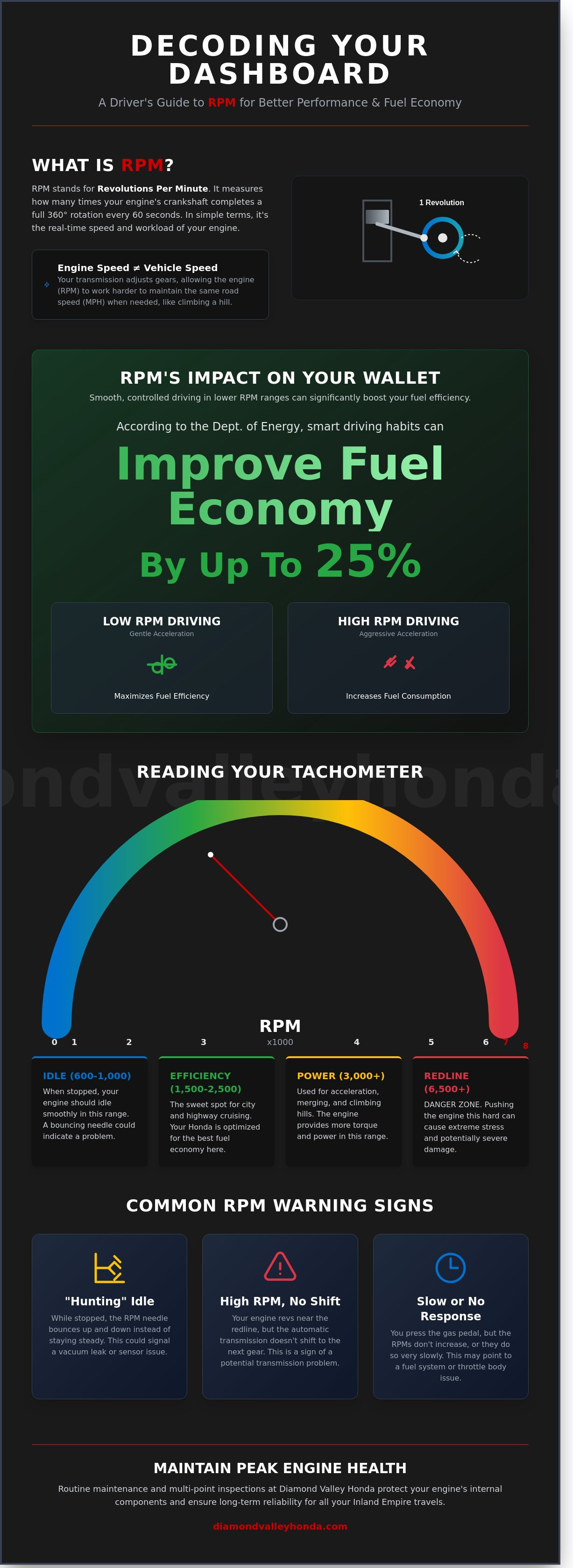
You deserve to feel confident and in control every time you start your car. In this guide, you will learn exactly how those rotations per minute affect your vehicle performance and how specific driving habits can improve your fuel economy by up to 25 percent according to Department of Energy data. We will provide a clear breakdown of your tachometer and help you identify when a high reading is a normal part of acceleration or a sign that you need to visit our service center for a professional inspection.
Key Takeaways
- Gain a clear understanding of the rpm meaning and how this measurement of your engine’s crankshaft speed impacts your daily commute in Hemet.
- Learn to decode your dashboard’s tachometer so you can monitor your engine's performance and improve your fuel economy across the Inland Empire.
- Explore how your Honda’s "power band" and VTEC technology work together to provide the perfect balance of strength and efficiency.
- Identify common red flags, such as "hunting" idles or vacuum leaks, to keep your vehicle running smoothly and avoid unexpected breakdowns.
- Discover how routine maintenance and multi-point inspections at Diamond Valley Honda protect your engine’s internal components and long-term reliability.
Understanding RPM: The Pulse of Your Car’s Engine
When you look at your dashboard, you will see a gauge called the tachometer. This dial tracks the Revolutions per minute (RPM) of your engine. For many Hemet drivers, these numbers might seem like technical jargon, but they provide a real-time window into your vehicle's health. Understanding the rpm meaning helps you drive more efficiently and protects your engine from unnecessary wear during your daily commute.
Mechanically, one revolution equals one full 360-degree turn of the engine crankshaft. This process starts when fuel and air ignite in the combustion chamber, pushing the pistons down. This downward force turns the crankshaft, which eventually sends power to your wheels. If your tachometer needle points to the number 3, it means your engine is spinning 3,000 times every sixty seconds. Because it tracks how many times your engine "fires," RPM is the primary indicator of your engine's current workload and operational speed.
The Difference Between Engine Speed and Vehicle Speed
It is a common misconception that high RPM always results in high vehicle speed. Your engine speed and your miles per hour (MPH) are two different metrics. Your car's transmission acts as the vital middleman between the engine and the wheels. By shifting through different gears, the transmission allows the engine to stay within a safe power range regardless of how fast the car is moving.
You can see this in action when you are climbing the steep grades of Highway 74. As the incline increases, your car might downshift to a lower gear. You will notice the RPM needle jump higher even if your speed stays at a steady 40 MPH. The engine spins faster in a lower gear to provide the torque needed to overcome the hill, proving that engine effort does not always equal road speed.
Why RPM Matters for Hemet Commuters
For those navigating the daily stop-and-go traffic on Florida Ave, monitoring your engine speed can save you money at the pump. High RPM levels generally correlate with increased fuel consumption. When you accelerate gently and allow your car to shift into higher gears sooner, you keep the engine in a lower, more efficient RPM range.
Paying attention to the tachometer also helps you predict when your car is about to shift. If you feel a jerk or notice the needle climbing toward the "red line" without a gear change, it may be time to visit our service center for a diagnostic check. RPM is the measurement of internal engine cycles per sixty-second interval. By keeping an eye on this pulse, you ensure your Honda remains a dependable partner for all your San Jacinto Valley travels.
Reading the Tachometer: What Your Dashboard is Telling You
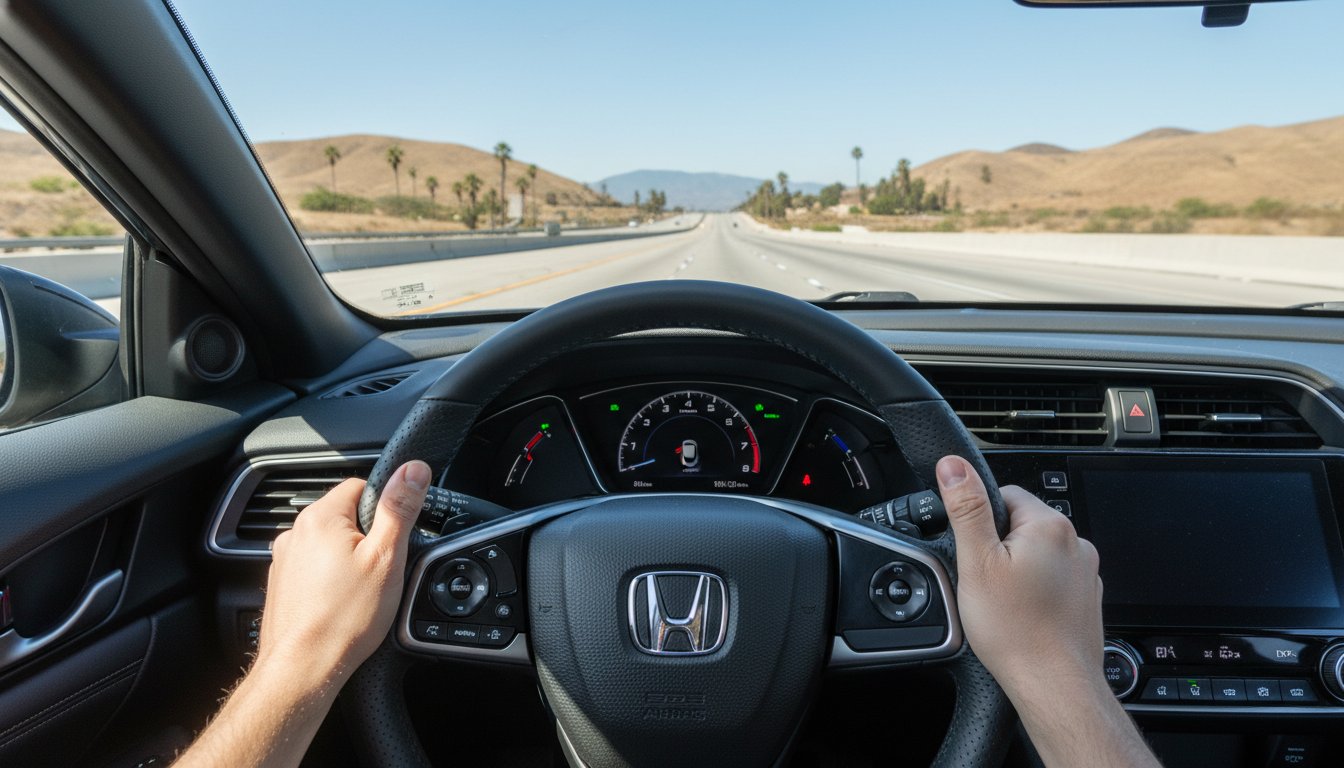
Look at your dashboard and you'll likely see two large circles. While the speedometer tracks your road speed, the tachometer measures your engine speed. This gauge is usually numbered 1 through 8 and features a small "x1000" label. This label is the key to understanding the rpm meaning for your specific vehicle. If the needle points to the 3, your engine's crankshaft is rotating 3,000 times every minute. It's a direct window into how hard your motor is working at any given second.
When you sit at a red light on Florida Avenue, your needle should rest steadily between 600 and 1,000 RPM. This is your engine's idle speed. If you notice the needle bouncing or dipping below 500 RPM while stopped, your car is telling you it needs attention. Keeping an eye on these small movements helps you catch minor issues before they become expensive repairs. Most modern Honda engines are designed to stay incredibly smooth during these idle periods.
Automatic vs. Manual Transmission RPM
Manual drivers use the tachometer as a primary guide for when to shift gears to maintain momentum. In an automatic Honda, the car's computer handles this by balancing power and fuel economy based on your throttle input. If you're driving through the Inland Empire's hillier terrain near the San Jacinto Mountains, you might notice your RPMs rise even if you aren't speeding up. This is often due to Honda's Grade Logic Control. This smart system adjusts shift points during climbs or descents to ensure you have enough torque or engine braking. It makes mountain driving much smoother for you and your passengers.
Decoding the "Redline" and Rev Limiters
Every tachometer has a section marked in bright red, typically starting around 6,500 or 7,000 RPM. This is the redline. Pushing your engine into this zone creates immense heat and physical stress. If the engine spins too fast, internal components like valves and pistons can actually collide. To prevent this, Honda engineers install electronic rev limiters. These safety systems temporarily cut fuel flow if you reach the danger zone, protecting your investment from a catastrophic engine failure.
You may have heard that revving your engine high helps "clear out the carbon" from the system. While older carbureted cars occasionally benefited from a spirited drive, modern fuel-injected engines don't require redlining to stay clean. In fact, consistent high-RPM driving just leads to faster wear and tear on your oil and internal seals. If you're worried about engine performance or carbon buildup, it's much better to schedule a professional inspection with a technician who knows your vehicle's specific needs.
RPM and Performance: Balancing Power and Fuel Economy
Understanding the rpm meaning helps you master your Honda’s power band. This is the specific range where your engine produces its peak torque and horsepower. For a 2024 Honda Civic with a turbocharged engine, peak torque arrives as low as 1,700 RPM and stays consistent through 4,500 RPM. When you accelerate hard to merge onto Highway 74, you might feel a surge of energy at higher levels. This is often thanks to VTEC technology. Honda’s Variable Valve Timing and Lift Electronic Control system adjusts the engine’s valves at high RPM, typically around 4,800 to 5,200 RPM, to allow more air into the cylinders. It’s a brilliant way to get extra power when you need it without requiring a massive, fuel-thirsty engine.
High RPM comes with a literal price at the gas pump. Every time your tachometer needle climbs, your engine consumes more fuel to maintain those speeds. If you stay in a lower gear too long, you are essentially throwing money away. Driving at 4,000 RPM while cruising uses significantly more gasoline than shifting up to stay at 2,000 RPM. Our team at Diamond Valley Honda recommends watching your tachometer to ensure you aren't overworking the engine during your daily Riverside County travels. Keeping your engine in a steady, lower range can improve your overall fuel economy by 10% to 15% over the life of the vehicle.
Climbing the Banning Pass: RPM and Torque
When you drive uphill toward Beaumont or Banning on the I-10, your RPM will naturally increase. Your Honda’s transmission downshifts to find the torque necessary to fight gravity. If you are towing a trailer or carrying five passengers, use Sport Mode or a lower gear setting to manage this climb. This prevents the transmission from "hunting" between gears, which can cause unnecessary wear. Don't let your RPM drop too low during a steep climb. This leads to engine lugging, a state where the engine struggles to turn under a heavy load. Lugging creates high pressure inside the cylinders and can cause permanent damage to your engine bearings over time.
Maximizing MPG in Menifee and Perris
Finding the "sweet spot" is the key to efficiency when driving through Menifee or Perris. Most Honda models cruise most efficiently between 1,500 and 2,500 RPM. Using your cruise control on flat stretches of road helps maintain this steady rpm meaning you won't suffer from the fluctuations of a human foot on the pedal. Be mindful of the Southern California heat. When Hemet temperatures exceed 100 degrees in the summer, your engine's air intake becomes less dense. Your car’s computer may slightly increase the idle RPM or shift points to compensate for the heat and the extra load of the air conditioning system. This is a normal function designed to protect your engine’s longevity during our intense local summers.
Common RPM Issues: What Inland Empire Drivers Should Watch For
Understanding the rpm meaning helps you spot engine trouble before it leads to a breakdown on the 74 or 79. One frequent sign of trouble is "hunting" idle. This happens when your tachometer needle bounces up and down while you're stopped at a light. Usually, this indicates a vacuum leak or a dirty throttle body that's confusing your car's computer. If the engine receives an inconsistent mixture of air and fuel, it will constantly adjust, causing that frustrating needle bounce.
If your engine stays at a high RPM while idling, your vehicle might have a faulty sensor. A damaged Idle Air Control valve often keeps the engine revving higher than the standard 600 to 900 RPM range. You should also listen for strange noises that change pitch as you accelerate. If you hear a whining or grinding noise that correlates directly with the engine speed, pull over. This often points to a failing alternator or a mechanical issue within the engine block that requires immediate professional attention.
Engine Hesitation and Low RPM
You might feel your car stuttering or vibrating when you try to accelerate from a stop. This engine hesitation often stems from worn spark plugs or failing ignition coils. Most Honda models require spark plug replacement every 60,000 to 100,000 miles to prevent these misfires. A clogged air filter can also starve the engine of oxygen. This air restriction causes the RPM to drop unexpectedly and can reduce your fuel efficiency by up to 10 percent during your daily Hemet commute.
Transmission Issues and RPM Surges
A transmission "slip" is a serious safety concern for Inland Empire drivers. You'll know it's happening if your RPM increases significantly, perhaps jumping from 2,000 to 4,000, but your vehicle doesn't actually speed up. This disconnect between engine power and wheel movement usually means your transmission fluid is low or degraded. Checking your fluid levels is the first step in diagnosing these surges. Since consistent maintenance keeps every system running smoothly, you should also keep an eye on other wear items. You can learn more about signs your Honda needs new brakes: Hemet drivers to stay ahead of your total vehicle service schedule.
Maintaining Engine Health at Diamond Valley Honda
Understanding the rpm meaning helps you drive more efficiently, but keeping those revolutions smooth requires consistent maintenance. When your engine reaches 3,000 or 4,000 RPM during a climb through the local hills, internal components move at incredible speeds. Our Hemet service center prioritizes regular oil changes to ensure these parts stay lubricated under pressure. Fresh oil reduces the friction that generates excessive heat, protecting your engine during high-rev situations. Without clean oil, the delicate balance of your Honda's internal timing can suffer, leading to decreased performance and potential long-term damage.
A steady idle is one of the most reliable indicators of a healthy engine. If you notice your tachometer needle bouncing or dipping while you're stopped at a red light on Florida Avenue, your car might have a vacuum leak. These leaks introduce unmetered air into the system, forcing the engine to struggle to maintain a consistent speed. Our multi-point inspections are designed to identify these issues early. We check hoses, seals, and gaskets to catch small air leaks before they affect your fuel economy or cause a stall.
Modern Honda vehicles rely on a sophisticated network of electronic sensors to manage engine speed. These include the Crankshaft Position Sensor and the Throttle Position Sensor, which must communicate perfectly with the car's computer. Our factory-trained technicians possess the specific expertise needed to diagnose these complex systems. If your tachometer acts strangely or your engine feels like it's surging, it is time for a professional diagnostic check at our facility.
The Diamond Valley Difference in Engine Care
We use Genuine Honda Parts to ensure your vehicle operates within its original factory-spec RPM ranges. These components are built to the exact tolerances of your specific model, providing a level of precision that generic parts cannot match. We value transparency in everything we do. Our service advisors take the time to explain the data behind every engine diagnostic, so you feel confident in your repair choices. We take pride in serving the San Jacinto Valley with expert care for both new and used Honda models.
- Precision Tools: We use Honda-specific diagnostic computers to read sensor data in real-time.
- Expert Staff: Our technicians undergo regular training to stay current on the latest Honda engineering.
- Local Commitment: We treat every vehicle like it belongs to a neighbor.
Schedule Your Multi-Point Inspection Today
Protect your investment by addressing small RPM fluctuations before they become expensive repairs. Regular maintenance is the most effective way to extend the life of your engine and maintain its resale value. We offer convenient service hours to accommodate busy drivers visiting us from Murrieta, Temecula, and Lake Elsinore. Our team is ready to help you get back on the road with total peace of mind.
Keep Your Engine Running Strong in Hemet
Grasping the rpm meaning gives you a direct window into your engine's performance. You now know how to read your tachometer to maximize fuel economy and identify early warning signs of mechanical wear. It's about protection. Monitoring these shifts helps you safeguard your investment while navigating the diverse roads of the Inland Empire. When you notice unusual fluctuations, rely on local experts who understand your vehicle's specific needs.
Our factory-trained technicians at Diamond Valley Honda have provided transparent service to local drivers for years. We use genuine Honda OEM parts to ensure every repair meets the high standards set by the manufacturer. We focus on building long-term trust through honest communication and a neighborly approach that makes every visit stress-free. You'll receive a detailed multi-point inspection report that breaks down your car's health into clear, logical steps.
Schedule Your Expert Honda Service in Hemet today to keep your car in peak condition. We're proud to be your trusted partner for a smooth and dependable drive.
Frequently Asked Questions
Is it bad to drive at high RPM for a long time?
Sustained driving at high RPM, typically above 4,000 or 5,000, places unnecessary stress on your engine components and cooling system. While your Honda is built for performance, constant high revs lead to faster oil degradation and increased internal friction. This habit can shorten the life of your seals and gaskets by 20 percent over several years. It's best to shift up early to maintain a steady, moderate pace through Hemet.
What is a normal RPM for a car when it is idling?
A healthy engine typically idles between 600 and 900 RPM once it reaches its standard operating temperature. Understanding the rpm meaning helps you spot early signs of engine trouble, like a rough idle or a vacuum leak. If your tachometer stays above 1,000 RPM while stopped at a light on Florida Avenue, your car might have a dirty throttle body or a faulty sensor that needs professional attention.
Why does my RPM go up when I am braking?
Your RPM increases during braking because the transmission downshifts to provide engine braking, which helps slow the vehicle down more efficiently. This is especially common in Honda vehicles equipped with Grade Logic Control, which manages gear ratios on steep hills. By shifting to a lower gear, the engine spins faster to help the brakes, ensuring you have better control while descending through the local canyons or approaching a red light.
Does high RPM use more gas even if I am not going fast?
Yes, high RPM consumes more fuel because the engine completes more combustion cycles every minute. Even if you aren't traveling at high speeds, staying in a lower gear keeps the engine working harder than necessary. Grasping the rpm meaning is essential for fuel economy, as keeping your revs between 1,500 and 2,500 can improve your gas mileage by up to 15 percent during your daily commute across Riverside County.
What should I do if my RPM needle is jumping while I am stopped at a light in Hemet?
You should bring your vehicle to Diamond Valley Honda for a diagnostic check if your needle is bouncing while you are stationary. A fluctuating needle often indicates a 10 percent drop in fuel pressure or a malfunctioning Idle Air Control valve. Our certified technicians can identify if a vacuum leak or a clogged fuel filter is causing the instability. Addressing this early prevents your engine from stalling in heavy Hemet traffic.
Can a bad battery cause my RPM to fluctuate?
A weak battery or a failing alternator can definitely cause your RPM to fluctuate by providing inconsistent voltage to the ignition system. If your battery drops below 12.4 volts, the engine computer may struggle to maintain a steady idle speed. This electrical interference often manifests as a 200 to 300 RPM surge. We recommend a battery test if you notice your dashboard lights flickering alongside the jumping tachometer needle.
Why does my Honda rev higher when I first start it in the morning?
Your Honda revs higher on cold starts to quickly reach the 190 degree operating temperature required for peak efficiency. This fast idle usually sits between 1,200 and 1,500 RPM for about 60 to 90 seconds. This process helps the catalytic converter start scrubbing emissions sooner, which reduces your environmental impact. Once the engine block warms up, the computer automatically drops the revs back down to a standard 750 RPM idle.
Is "redlining" my car once in a while good for the engine?
Occasional high revving can help remove carbon buildup from your valves, but you should never actually hit the red zone on your gauge. Pushing the engine to 5,000 RPM once it's fully warm can be beneficial, but exceeding the manufacturer's limit risks catastrophic internal damage. Most modern engines have a rev limiter that cuts fuel at a specific point to prevent failure. Stick to spirited, safe driving within the marked limits.