
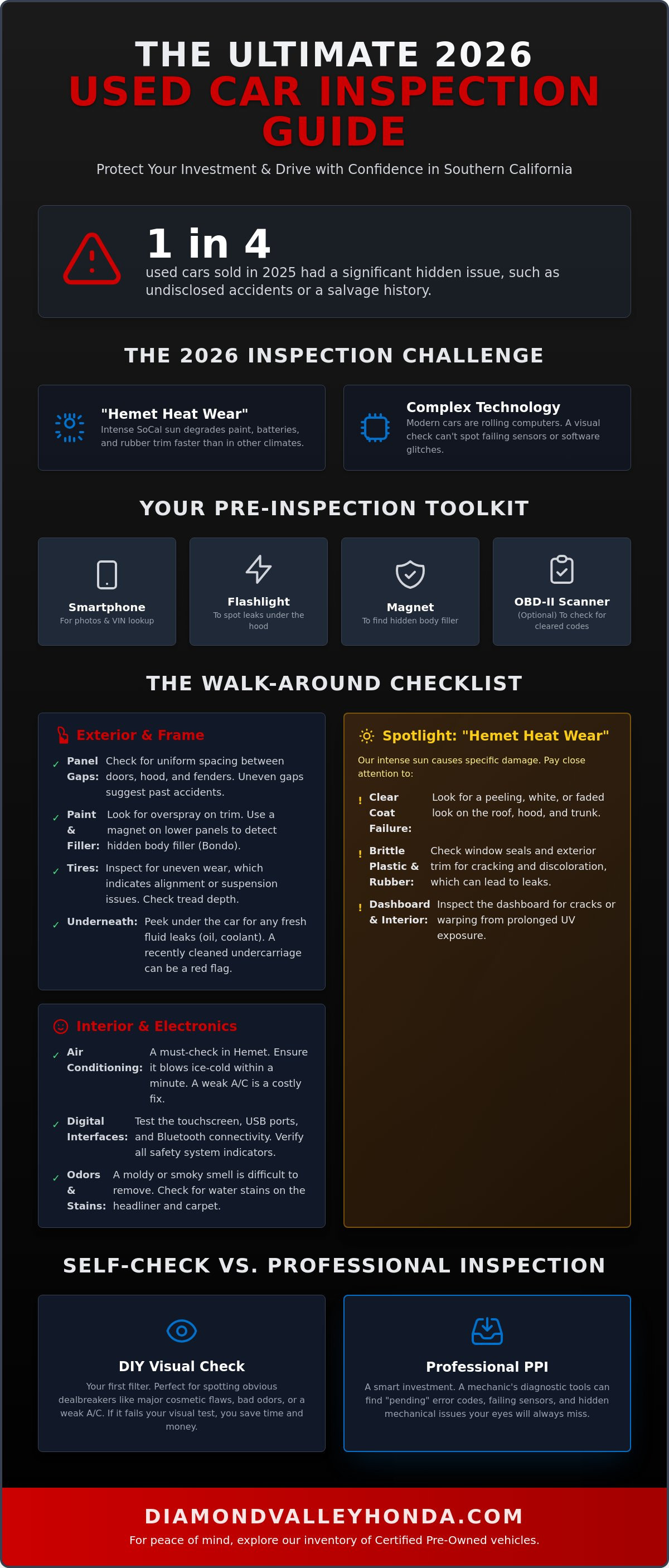
Did you know that one in four used cars sold in 2025 had a significant issue hidden by the seller, such as an undisclosed accident or salvage history? That is a high risk to take when you are searching for a reliable ride in Riverside County. Using a comprehensive used car inspection checklist 2026 is the only way to protect your investment and your peace of mind on the road.
We know that the recent leap in vehicle technology can feel overwhelming, especially when you're trying to negotiate with a private seller. You shouldn't have to be a master mechanic to feel confident about your next purchase. This guide helps you master the art of the used car pre-purchase inspection with a checklist designed specifically for Southern California drivers. We will walk you through the essential mechanical checks, the latest 2026 tech requirements, and the specific signs of heat-wear to look for. You will gain a printable list for the lot and the clarity to know exactly when to pay for a professional inspection.
Key Takeaways
- Learn why modern sensors and software make the 2026 inspection process more critical than ever for your safety.
- Discover how to spot "Hemet heat wear" on exterior trim and interior surfaces to avoid costly cosmetic repairs.
- Use our used car inspection checklist 2026 to evaluate engine health and fluid quality before you commit to a purchase.
- Master a specific test drive protocol that reveals hidden transmission issues and safety system failures.
- Gain the confidence to negotiate a better price or walk away from a bad deal by identifying major mechanical red flags.
Why a 2026 Used Car Inspection is More Complex Than Ever
Buying a used car in Hemet used to be about checking the tire tread and listening for an engine knock. By 2026, the game has changed. Modern vehicles are essentially rolling computers, relying on a complex web of software and sensors to keep you safe on the road. This technological shift means a standard used car inspection checklist 2026 must look far beyond the mechanical basics of the past.
Living in the Inland Empire adds its own set of challenges to vehicle longevity. Our intense summer heat and the heavy stop-and-go traffic on Florida Avenue or the 215 freeway put unique stress on every component. High temperatures can degrade battery health in hybrids and EVs faster than in cooler climates, while constant idling in traffic wears down cooling systems and brake components. Before you hand over your hard-earned money, you should understand what is a pre-purchase inspection and why it's your primary defense against hidden repair bills. We want you to drive a safe, reliable car, even if you don't end up buying from our inventory.
Self-Inspection vs. Professional PPI
You can often spot a "lemon" within the first ten minutes of a walk-around. A DIY visual check serves as your first filter. If you see mismatched paint or smell mold in the cabin, it's usually time to walk away early. However, a professional mechanic is necessary for a deep diagnostic scan. They use specialized tools to read "pending" codes that haven't triggered a dashboard light yet. In Hemet, paying for a professional inspection is a smart investment. It provides a clear cost-benefit advantage by catching failing sensors or software glitches that a simple visual check will always miss.
The Essential Preparation Toolkit
Don't show up to a viewing empty-handed. Your smartphone is your most powerful tool. Use it to take high-resolution photos of the VIN and any areas of concern. A small magnet can help you find body filler hidden under fresh paint, while a bright flashlight reveals fluid leaks in the dark corners of the engine bay. If you're tech-savvy, a basic OBD-II scanner can tell you if the seller recently cleared error codes to hide a persistent problem. Always request a vehicle history report before you even drive out to meet a private seller. This preparation ensures you stay in control of the negotiation from the very start.
Exterior and Interior: Spotting Hidden Damage and Hemet Heat Wear
A thorough visual inspection is your first line of defense. While many buyers focus solely on the engine, the body and cabin tell the true story of how a vehicle was treated by its previous owner. When you use your used car inspection checklist 2026, start with a slow walk-around in bright, natural light. Look closely at the panel gaps between the doors, hood, and fenders. These gaps should be perfectly uniform. If one side is wider than the other, it often indicates a major accident and a frame that was never quite pulled back to factory specifications.
Living in the Inland Empire means dealing with intense UV exposure. Hemet sun damage is a real concern that many national guides overlook. Check the horizontal surfaces like the roof and trunk for clear coat failure, which looks like white, peeling skin on the paint. Inspect the rubber window seals and plastic trim carefully. In our climate, these can become brittle and crack, leading to wind noise or water leaks during the rare rainy season. If you are unsure about the legal protections available when buying from different sources, reviewing FTC consumer advice can help you understand your rights before you sign any paperwork.
The Body and Frame: Beyond the Surface
Don't trust your eyes alone. Run a small magnet along the lower doors and quarter panels. If it doesn't stick, you've likely found plastic body filler used to hide dents or rust. Look for overspray on the black rubber seals around the windows. This is a classic sign of a cheap repaint meant to mask deeper issues. While rust is rare in Southern California, always peek underneath for fresh fluid leaks. If the undercarriage looks like it was recently steam-cleaned, the seller might be trying to hide an active oil or coolant leak. Also, check the tires for uneven wear patterns, which usually signal a suspension problem or a need for a wheel alignment service.
Interior Electronics and Cabin Comfort
The interior is where you spend your time, so it needs to be both functional and comfortable. In Hemet and Temecula, a weak air conditioning system is a dealbreaker. Turn the A/C to its lowest setting and ensure it blows ice-cold within a minute. Testing the digital interfaces is a vital part of your used car inspection checklist 2026. Test every USB-C port, the infotainment screen, and the digital instrument cluster for glitches. Check the upholstery for sun-rot on the tops of the rear seats. If the cabin smells like heavy perfume or ozone, the seller might be masking cigarette smoke or mold from a previous flood. If you want to skip the guesswork of private sales, you can browse a vetted used vehicle inventory that has already passed these rigorous physical checks.
Under the Hood: Mechanical Integrity and Hybrid Health
Popping the hood is where you truly begin to separate a well-maintained vehicle from a potential money pit. In the Inland Empire, the engine bay is a high-stress environment where extreme temperatures accelerate the aging of every component. Use your used car inspection checklist 2026 to verify that the previous owner stayed on top of their service intervals. Start with a thorough fluid diagnostic. Pull the oil dipstick and check the color; clean oil should be amber or light brown. Milky oil is a primary sign of head gasket failure. You should also inspect the coolant, which should be bright and translucent. If it looks brown or has oily bubbles floating on top, the cooling system is likely contaminated.
Hemet's desert heat is particularly brutal on rubber and plastic. Examine the serpentine belt for "glazing," which is a shiny, hardened appearance that suggests the belt is slipping and ready to snap. Squeeze the radiator hoses once the engine is cool; they should feel firm but pliable, not crunchy or overly soft. Check the 12-volt battery for white, acidic corrosion around the terminals and look for the manufacture date sticker. If the battery is more than three years old, it's already on borrowed time in our Southern California climate.
Engine Performance and Leak Detection
Always insist on a cold start. If the seller has already warmed up the car before you arrive, they might be hiding a loud rattle or a rough idle that only occurs when the engine is first turned on. Listen for any rhythmic tapping or metallic knocks that could indicate internal wear. A faint, sweet smell like maple syrup usually points to a coolant leak, which is a major overheating risk during a summer drive to Temecula. Unscrew the oil fill cap and look for thick, black "sludge" buildup. This is a clear sign that the owner neglected basic automotive maintenance tips, potentially shortening the engine's lifespan.
2026 Tech: Hybrid and Electric Components
By 2026, many vehicles in our local used inventory are hybrids or plug-ins. You must check the State of Health (SOH) for the hybrid battery. While a full diagnostic requires a professional tool, many modern cars display a battery health percentage in the infotainment settings. Look for the bright orange high-voltage cables under the hood. These must be perfectly intact; any fraying or signs of rodent damage can be incredibly expensive to repair. During your initial low-speed movement, pay close attention to the regenerative braking. The hand-off between the electric motor and the physical brake pads should feel smooth and consistent, without any surging or grabbing.
The 2026 Test Drive Protocol: Verifying Safety Systems
The test drive is the ultimate truth-teller during your search. It is the moment where the vehicle stops being a collection of parts and starts being a machine you trust with your family's safety. When you turn the start button, every warning light on the dashboard should illuminate briefly. This is the "bulb check" phase. If the check engine or airbag light fails to appear at all, it's possible the system has been tampered with or disabled. Once the engine is running, every single one of those lights must extinguish. Any persistent icons are immediate red flags for your used car inspection checklist 2026.
While you navigate the streets of Hemet, pay close attention to how the transmission handles various speeds. Shifts should feel crisp and predictable. If the car hesitates or "hunts" for a gear, it could signal a failing transmission or a software glitch. When you apply the brakes, the pedal should feel firm and linear. A vibrating or pulsing pedal usually means the rotors are warped, which is a common issue for cars used in heavy Inland Empire traffic. Take the vehicle out on Highway 74 or Highway 79 to check the steering alignment. On a straight stretch, the car should track true without pulling aggressively to either side.
Testing the Mechanical Vitals
Head toward San Jacinto or Perris to find roads that aren't perfectly smooth. This is the best way to listen for clunking sounds from worn struts or suspension bushings. Accelerate to highway speeds to check for high-speed vibrations. If the steering wheel shakes at 65 mph, the tires likely need a tire rotation and balancing. Don't forget to test the parking brake on a slight incline to ensure it holds the vehicle's weight securely. These mechanical basics are just as vital as the high-tech features.
Calibrating the Sensors and Cameras
Modern safety tech is a major part of a vehicle's value in 2026, so you must verify it works in real-time. Shift into reverse and check the backup camera for a clear, flicker-free image. If the car has a 360-degree view, ensure the stitching between the different camera angles is seamless. While on the road, watch for the blind spot monitoring indicators in the side mirrors as traffic passes you. Test the lane departure warning by safely moving toward a lane marker; the car should alert you immediately. Finally, engage the adaptive cruise control to ensure it maintains a steady gap without erratic braking. If you want a vehicle where these systems have already been professionally verified, you can explore our certified pre-owned Honda vehicles for total peace of mind.
The Final Verdict: Private Seller vs. Hemet Certified Pre-Owned
By now, you have the tools to separate a gem from a lemon. If your used car inspection checklist 2026 reveals major red flags like milky oil, disabled dashboard warning lights, or mismatched panel gaps, don't hesitate to walk away immediately. These aren't just minor maintenance tasks; they are clear indicators of deep-seated issues that will likely cost you thousands of dollars down the road. You should never feel pressured to buy a car that doesn't meet your safety standards. If the issues you find are smaller, such as worn tires or a battery nearing the end of its life, use those findings as leverage. Show the seller exactly what needs attention and ask for a price reduction that covers the cost of the necessary repairs.
For many drivers in the Inland Empire, the private market feels like a high-stakes gamble. You are often buying someone else's problem without any safety net. Choosing Certified Pre-Owned Honda Vehicles acts as an "easy button" for your car search. It removes the stress of the unknown by providing a vehicle that has already been through a rigorous vetting process. You deserve to drive a vehicle that has already passed the toughest tests, giving you total confidence every time you hit the road.
The Diamond Valley Honda CPO Difference
We believe in transparency and local reliability. Our factory-trained technicians perform a 182-point inspection on every CPO vehicle, checking everything from the hybrid battery's state of health to the precision of the advanced safety sensors. We specifically handle the "Hemet Heat" prep, ensuring that cooling systems, hoses, and seals are robust enough for our desert climate. Every CPO car also comes with a powertrain warranty and roadside assistance. This provides a level of protection and peace of mind that a private seller simply cannot match.
Next Steps for Hemet Buyers
If you have found a vehicle through a private seller and want a professional second opinion, you can schedule a pre-purchase inspection at our Honda service center. Our experts will use their diagnostic tools to give you a clear picture of the car's health. If you would rather skip the inspection guesswork entirely, browse our current used cars for sale that have already been vetted and detailed for our local neighbors. Once you find the right fit, our team can show you how to finance a car with confidence and clarity. We are here to be your trusted partner in finding a reliable, safe vehicle for your daily commute.
Drive Home with Confidence in Hemet
Navigating the used market in 2026 requires looking beyond the surface to verify complex safety sensors and the specific effects of our Inland Empire climate. By following a structured approach, you can identify mechanical red flags and negotiate with clarity. This used car inspection checklist 2026 serves as your roadmap to a smarter purchase, ensuring you don't inherit someone else's hidden repair bills or safety concerns.
If you want to skip the stress of self-inspections and private seller negotiations, we invite you to explore a more reliable path. Our factory-trained technicians perform a rigorous 182-point CPO inspection on our certified models to guarantee quality. We also provide transparent vehicle history reports for every car on our lot, so you know exactly what you're getting before you sign. You can browse our inspected used inventory in Hemet today to find a vehicle that has already passed the toughest tests. You deserve a safe, dependable ride that you can trust for all your Southern California adventures.
Frequently Asked Questions
Is a professional used car inspection worth the money in 2026?
A professional inspection is absolutely worth the investment because modern vehicles rely on complex software that a visual check cannot detect. While you pay a fee upfront, it can save you thousands in hidden repair costs later. Since one in four used cars sold in 2025 had a significant hidden issue, having an expert scan for pending fault codes is your best insurance policy.
Can I perform a used car inspection myself if I am not a mechanic?
You can certainly perform an initial screening yourself to rule out obvious lemons. By using a used car inspection checklist 2026, you can spot mismatched paint, brittle Inland Empire heat-worn trim, and uneven tire wear. However, a DIY check is a filter, not a final verdict. It helps you decide which cars are worth the cost of a professional diagnostic scan.
What are the biggest red flags to look for when buying a used car in Hemet?
The biggest local red flags include clear coat failure from UV exposure, brittle engine hoses, and weak air conditioning. You should also watch for milky oil or a sweet coolant smell, which are signs of overheating damage common in desert climates. If a car struggles to maintain its temperature during a test drive on Florida Avenue, it is a major warning sign.
Does a clean Carfax report mean the car is in perfect condition?
A clean vehicle history report is a great start, but it does not guarantee a car is in perfect condition. These reports only show incidents that were officially reported to insurance or police. They won't show a history of skipped oil changes or minor accidents repaired off the books. Always combine a history report with a physical inspection to see the full picture.
How do I check if the ADAS and safety sensors are working correctly?
You can verify basic ADAS functionality during your test drive by observing how the car reacts to lane markers and surrounding traffic. Watch for blind spot indicators in the mirrors and listen for proximity alerts while parking. However, a full calibration check requires professional diagnostic tools. A mechanic can ensure the cameras and radar sensors are properly aligned and communicating with the vehicle's computer.
What happens if a private seller refuses to let me get a PPI?
If a private seller refuses to let you get a pre-purchase inspection, it is usually a sign that they are hiding a known defect. A transparent seller should have no problem letting an expert look at the car on your dime. Walking away from the deal is the safest move in this situation. There are plenty of other vehicles available that won't require you to take an unnecessary gamble.
How does a Honda Certified Pre-Owned inspection differ from a standard used car check?
A Honda Certified Pre-Owned inspection is far more rigorous than a standard used car check. Our factory-trained technicians follow a 182-point protocol set by the manufacturer, covering everything from engine performance to floor mat condition. Unlike a standard check, a CPO inspection results in a manufacturer-backed warranty and roadside assistance, ensuring the vehicle meets strict age and mileage requirements.
How much should a pre-purchase inspection cost in the Inland Empire?
Pre-purchase inspection costs in the Inland Empire vary depending on the shop and the complexity of the vehicle. Most basic inspections range from $100 to $250. While some specialized mobile services might charge more for a detailed hybrid battery health check, the price is generally a small fraction of what a major engine or transmission repair would cost you.