Your Honda's transmission fluid isn't actually designed to last forever, especially when you're tackling the 91 freeway in triple-digit heat. Many drivers feel a sense of dread at the thought of transmission trouble, and the confusing claims about "lifetime" fluids only make it harder to protect your investment. You likely chose a Honda for its legendary reliability, so you shouldn't have to worry about whether your gearbox can handle the climb through the Cajon Pass or a July afternoon in the Inland Empire.
We understand that you want a smooth, stress-free drive every time you get behind the wheel. That's why we're here to help you understand the real requirements for a Honda transmission fluid change Riverside. You'll learn how to spot the early warning signs of fluid breakdown before they turn into costly repairs. We will also explain why the updated 30,000-mile severe service interval is essential for local drivers and how using factory-certified fluids like ATF Type 2.0 or HCF-2 keeps your warranty intact. By the end of this guide, you'll have the expert advice you need to ensure your vehicle stays on the road for years to come.
Key Takeaways
- Understand how Inland Empire heat breaks down transmission fluid and why "lifetime" claims don't apply to our local climate.
- Identify common warning signs like gear slipping or CVT vibrations that indicate your vehicle needs professional attention.
- Master your vehicle's alerts by learning what Maintenance Minder Sub-Code 3 means for your Honda transmission fluid change Riverside.
- Compare the benefits of Honda Genuine Parts against generic fluids to ensure your transmission remains protected and efficient.
- Discover why factory-trained expertise is the smartest way to extend the life of your Honda Accord, Civic, or CR-V.
Why Your Honda Needs a Transmission Fluid Change in Riverside’s Heat
Living in the Inland Empire means dealing with some of the most demanding driving conditions in the country. While your Honda is built for longevity, the scorching 100-degree Riverside summers place an immense amount of stress on your vehicle's mechanical systems. One of the most critical components is your transmission fluid. Think of it as the vital lubricant and primary coolant for your car's gearbox. Without it, the complex gears and clutches inside would quickly overheat and fail under the pressure of a July afternoon.
Automatic transmission fluid is a specialized liquid that performs several high-stakes jobs simultaneously. It doesn't just sit there. It actively moves heat away from the metal components that generate friction during every gear shift. When the temperature outside climbs, the fluid's ability to cool your transmission decreases. This leads to oxidation, a process where the fluid chemically breaks down and loses its protective qualities. Once this happens, you aren't just looking at a minor maintenance task. You are risking a multi-thousand dollar replacement cost that could have been avoided with a simple service.
The Role of Transmission Fluid in Your Honda
Your Honda relies on this fluid to create the hydraulic pressure necessary to shift gears seamlessly. Whether you're driving a traditional automatic or a modern CVT, the fluid ensures that the transition between speeds is crisp and efficient. Beyond shifting, it acts as a detergent. It captures tiny metal shavings and debris to keep the internal passages clean. This prevents clogs that could lead to sluggish performance or complete gear failure. Fresh fluid ensures these additives are active and ready to protect your investment.
Riverside Driving: A Stress Test for Your Gearbox
Commuting on the CA-91 or I-215 isn't just frustrating for you; it's a brutal workout for your car. The constant stop-and-go nature of Riverside traffic keeps your transmission shifting repeatedly. This generates significant internal heat that generic fluids struggle to handle. When you combine this mechanical friction with the high ambient temperatures of our region, you enter what Honda defines as severe driving conditions.
For most Southern California drivers, the standard maintenance intervals found in generic manuals aren't enough. Heat speeds up fluid degradation, making a Honda transmission fluid change Riverside a proactive necessity. By refreshing your fluid at the recommended severe service intervals, you ensure that your gearbox remains protected against the unique environmental challenges of the Inland Empire. It's a small step that guarantees your Honda stays as reliable as the day you drove it home.
Genuine Honda Fluids vs. Generic Riverside Repair Shops
You might think any quick-lube shop in the Inland Empire can handle your transmission service. However, Honda transmissions are precision instruments that require chemistry matching their specific engineering. Choosing a generic shop for your Honda transmission fluid change Riverside often means getting a "universal" fluid. These products are designed to work across dozens of different vehicle makes, which means they aren't optimized for any of them. Using the wrong fluid can lead to a noticeable "shudder" during acceleration or premature wear on internal components.
Honda transmissions use unique friction modifiers that allow clutches to engage and disengage with exact timing. When you use a generic alternative, the viscosity may be slightly off. This can cause your car to "hunt" for the right gear or shift harshly, especially when you're merging onto a busy Riverside freeway. Sticking with Honda Genuine Parts ensures that every shift remains as smooth as the day you bought your vehicle.
The Science of Honda Genuine ATF-DW1 and HCF-2
Honda utilizes two primary fluids to keep their vehicles running perfectly. ATF-DW1 is the standard for traditional automatic transmissions, while HCF-2 is designed specifically for Continuously Variable Transmissions (CVTs). CVTs are incredibly sensitive to fluid quality because they rely on a steel belt and pulley system. If the fluid doesn't provide the exact amount of grip required, that belt can slip and cause catastrophic failure. Honda engineers design fluid specifically for their proprietary alloy components to ensure maximum protection and efficiency.
Why 'Universal' Fluids Often Fall Short
Many independent shops stock universal fluids to keep their overhead low. While these fluids might meet basic standards, they lack the specific additives that protect Honda's unique clutch materials. Over time, the lack of these additives can lead to internal slipping and increased heat. You can check expert advice on When to Change Transmission Fluid to see how critical proper maintenance is for modern gearboxes.
There is also the matter of your powertrain warranty. Using non-approved fluids can sometimes jeopardize your coverage if a transmission failure occurs. If a technician discovers unapproved fluid during a repair, it could lead to a denied claim. Investing in the correct fluid today is a smart, stress-free way to avoid massive expenses down the road. It's about more than just a simple service; it's about protecting the long-term health of your Honda.
5 Signs Your Honda Needs a Transmission Fluid Change
Your Honda communicates with you through subtle changes in how it feels on the road. Recognizing these signs early can be the difference between a simple maintenance visit and a major mechanical overhaul. If you've been noticing odd behaviors while driving through the Inland Empire, it's time to pay attention. If you're searching for a Honda transmission fluid change Riverside, you're likely already experiencing one of the following red flags.
- Slipping Gears: You might notice your engine revving higher than usual, but the car doesn't seem to accelerate at the same pace. This "slipping" feeling suggests the fluid can no longer provide the hydraulic pressure needed to hold the gears in place.
- The CVT Shudder: Many modern Honda models use Continuously Variable Transmissions. When the fluid in these systems gets old, you may feel a distinct vibration or shuddering sensation when pulling away from a stop.
- Delayed Engagement: If you shift from Park to Drive and there's a two or three-second pause before the car actually moves, your fluid levels or quality are likely compromised.
- Audible Clunking: Harsh shifts that come with a "clunk" or a "bang" are never normal. This often indicates that the fluid is too thin or dirty to cushion the moving parts.
- Warning Lights: A flashing "D" indicator on your dashboard or a Check Engine light is your car's way of screaming for help. These lights often trigger when the transmission's internal sensors detect improper pressure or excessive heat.
Visual and Olfactory Cues
Checking your fluid is a straightforward way to gauge your transmission's health. Healthy Honda fluid is typically a bright pink or translucent red color. If you pull the dipstick and see dark brown or black liquid, it's a clear sign of oxidation. A burnt smell is even more urgent. This scent suggests that the fluid has lost its ability to manage heat, leading to internal friction that can damage delicate components. According to the Car Care Council maintenance guidelines, the condition of your fluid is a primary factor in the wear and tear of your entire gearbox. If your model doesn't have a dipstick, a professional inspection is the only way to verify the fluid's state.
Performance Issues You Shouldn't Ignore
Don't ignore audible clunks or "hard shifts" that feel like the car is jerking into place. These symptoms often point to low fluid levels or high contamination from metal shavings. Following expert automotive maintenance tips helps you stay ahead of these problems before they leave you stranded. Proactive care is always more affordable than reactive repairs. A quick Honda transmission fluid change Riverside can restore your vehicle's smooth performance and provide the peace of mind you deserve during your daily commute.
Honda Maintenance Minder Codes and Service Intervals
Your Honda doesn't just guess when it needs service. It uses a sophisticated onboard computer to monitor your specific driving habits. In a city like Riverside, where stop-and-go traffic and extreme temperatures are the norm, the system tracks engine revolutions and operating heat to determine exactly when your fluid is reaching the end of its life. This proactive approach takes the guesswork out of maintenance, but it only works if you know what the signals mean.
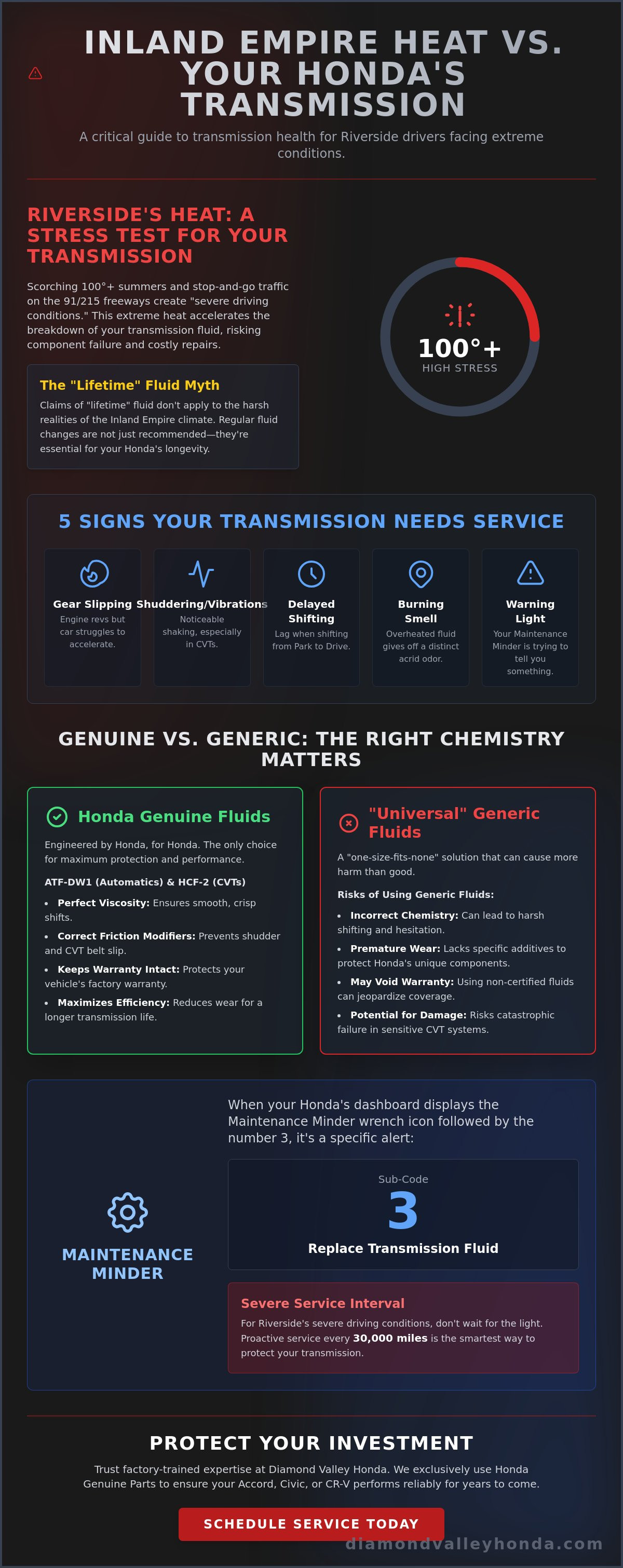
When the maintenance light appears on your dashboard, you'll likely see a letter followed by a series of numbers. If you see the number 3, your car is telling you it's time for a transmission service. This code 3 should never be ignored if you want to maintain your Honda dealer Hemet CA relationship and protect your vehicle's resale value. Whether you drive a Civic, Accord, or CR-V, seeing this code is your cue to book a professional inspection.
Decoding Your Dashboard
The standard recommendation for a Honda transmission fluid change Riverside often falls between 30,000 and 60,000 miles. However, the Inland Empire's climate qualifies as a "severe" driving environment. Frequent idling on the I-215 during a heatwave causes fluid to degrade much faster than it would in a cooler, more open environment. Older Hondas with higher mileage require even more frequent attention. As seals age and internal components wear, keeping fresh fluid in the system becomes the most effective way to prevent a total mechanical failure.
Drain and Fill vs. Transmission Flush
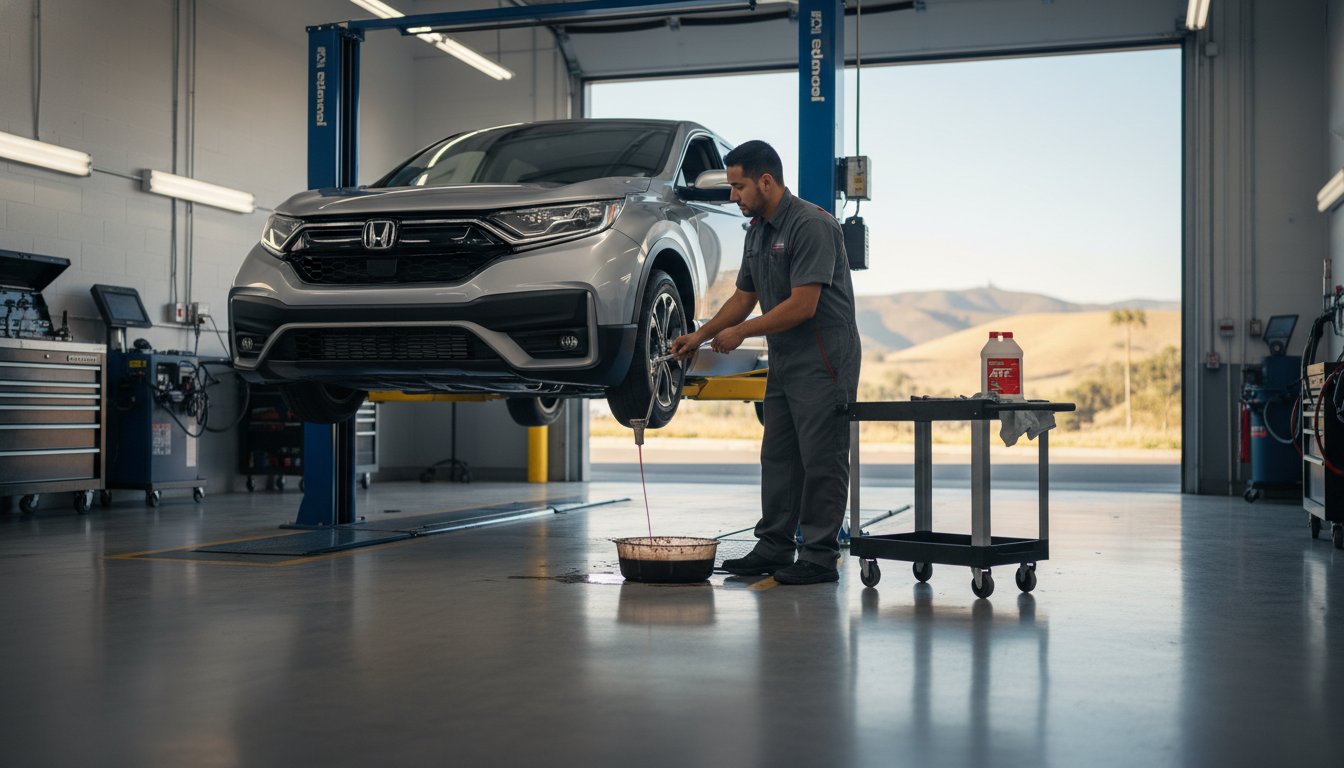
There is a significant difference between a standard fluid change and a high-pressure flush. A "drain and fill" involves removing the old fluid from the transmission pan and replacing it with fresh Honda Genuine Parts. This is the method Honda generally recommends. It effectively refreshes the fluid without disturbing the internal components that have settled over time.
In contrast, some generic shops offer high-pressure flushes that force fluid through the system. This can be risky for Honda gearboxes. The intense pressure can dislodge tiny bits of debris or sludge, pushing them into sensitive internal valves where they can cause clogs. It can also put undue stress on delicate internal seals. Factory-trained technicians know the specific protocol for your year and model to ensure the job is done safely. If your Maintenance Minder is showing a code 3, you should schedule your service online to ensure your transmission receives the exact care it needs.
Expert Honda Transmission Service Near Riverside at Diamond Valley Honda
Finding a reliable partner for your Honda transmission fluid change Riverside doesn't have to be a stressful search through generic repair shops. While there are many options in the Inland Empire, choosing a team that specializes exclusively in your vehicle's engineering makes a world of difference. At Diamond Valley Honda, we position ourselves as your trusted local partner, providing the precision and care that only factory-trained technicians can offer. We understand the specific needs of your Honda Accord, Civic, or CR-V, and we use 100 percent Honda Genuine parts and fluids for every single service.
Our technicians spend their entire day working on Honda systems. This specialization means they recognize the subtle differences between a 10-speed automatic in a new Honda Odyssey and the CVT in a Civic Hatchback. When you trust us with your vehicle, you aren't just getting a fluid swap. You're getting a comprehensive inspection from experts who know exactly what to look for. We invite you to enjoy a transparent, stress-free maintenance experience where your questions are answered and your vehicle's longevity is our primary goal.
The Diamond Valley Difference
We believe that high-quality automotive care should feel neighborly and straightforward. Our commitment to the community is reflected in how we treat every driver who makes the trip from Riverside. When you visit our expert Honda service center, you'll find that scheduling is simple and our communication is clear. We avoid high-pressure tactics, opting instead to provide you with the facts you need to make informed decisions about your car.
For Riverside commuters, we know your time is valuable. Our facility features a comfortable waiting area with amenities designed to make your stay productive or relaxing. Whether you need to catch up on emails or simply want to enjoy a cup of coffee while we refresh your transmission fluid, we've created an environment that respects your schedule. It's this blend of world-class expertise and local, personalized care that sets us apart from larger, impersonal corporate chains.
Schedule Your Service Today
Don't wait for a dashboard warning light to tell you that your transmission is struggling. Proactive maintenance is the best way to finance a car long-term, as it preserves your vehicle's trade-in value and prevents the need for major repairs. A well-documented service history with a certified dealer is a powerful asset when it's time to upgrade to a newer model. You can book your appointment online or give us a call to find a time that works for you.
We frequently offer service specials to ensure that expert care remains affordable for our neighbors. Keeping your Honda transmission fluid change Riverside on schedule is a smart, stress-free decision that protects your performance for miles to come. Let our team in Hemet show you how easy and reliable professional Honda service can be.
Keep Your Honda Shifting Smoothly for Miles
Protecting your Honda's performance starts with recognizing that our local Inland Empire climate demands more than just basic care. By staying ahead of Maintenance Minder Code 3 and choosing Honda Genuine Parts over generic alternatives, you ensure your gearbox remains resilient against the heat. You've worked hard for your vehicle; don't let oxidized fluid or "universal" substitutes cut its life short. Fresh fluid is the simplest way to maintain that signature Honda drive quality and ensure a reliable commute every day.
At Diamond Valley Honda, our factory-trained technicians provide the transparent, neighborly service you deserve. We use only 100 percent Genuine Honda Parts & Fluids to guarantee your vehicle meets the manufacturer's exact standards. Whether you're commuting on the 91 or exploring the local hills, a professional Honda transmission fluid change Riverside is the smartest way to preserve your car's value and reliability. We are committed to keeping your journey stress-free and efficient.
Schedule Your Honda Transmission Service at Diamond Valley Honda Today. We look forward to helping you stay on the road with confidence.
Frequently Asked Questions
How much does a Honda transmission fluid change cost in Riverside?
The cost of this service depends on your specific vehicle model and the type of fluid it requires, such as ATF-DW1 or HCF-2 for CVTs. Prices can vary between service centers based on current labor rates and parts costs. You should contact a service advisor for a precise quote that reflects your Honda's specific needs and any current maintenance specials.
Can I use any brand of ATF in my Honda Civic or Accord?
You should stick exclusively to Honda Genuine fluids to protect your transmission's internal components. Honda gearboxes are engineered with specific friction modifiers that universal or generic fluids often lack. Using a non-approved brand can lead to poor shift quality, increased internal heat, and even premature mechanical failure over time.
How often should a Honda CVT transmission fluid be changed?
For drivers facing the extreme heat of the Inland Empire, a 30,000-mile interval is the safest choice for a Honda transmission fluid change Riverside. While some schedules suggest longer intervals, our local stop-and-go traffic and high temperatures qualify as severe driving conditions. Regular changes ensure the steel belt and pulleys in your CVT stay properly lubricated.
What is the difference between a transmission flush and a fluid change?
A fluid change is a "drain and fill" process that replaces the fluid in the pan, which is the method Honda officially recommends. A flush uses high-pressure equipment to force out all the old fluid. Honda generally advises against high-pressure flushes because they can dislodge debris or damage sensitive internal seals and valves.
Will skipping a transmission fluid change void my Honda warranty?
Neglecting your scheduled maintenance can potentially lead to a denied warranty claim if your transmission fails. Manufacturers require proof that the vehicle was maintained according to the owner's manual. Keeping a record of your Honda transmission fluid change Riverside ensures you remain compliant with your powertrain warranty requirements and protects your investment.
Why is my Honda shuddering when I accelerate?
A shuddering or vibrating sensation during acceleration often indicates that your transmission fluid has oxidized or become contaminated. This breakdown prevents the fluid from providing the necessary grip for the internal clutches or CVT belt. If you feel this vibration, it is a sign that the fluid can no longer manage the internal friction and heat effectively.
Do I need to change my transmission filter as well?
Most modern Honda vehicles use an internal filter that is not designed to be replaced during routine maintenance. Unlike an oil filter, the transmission filter is typically only serviced during a major repair or a complete transmission overhaul. For standard preventative care, a professional drain and fill of the fluid is the primary requirement.
Is it better to go to a dealership or a local Riverside repair shop for transmission work?
A dealership provides factory-trained technicians who work exclusively on Honda systems every day. While a local shop might offer general repairs, a certified center uses specialized diagnostic tools and 100 percent Genuine Honda parts. This expertise ensures that your service follows the exact manufacturer protocols, providing a level of precision that generic shops cannot always match.