
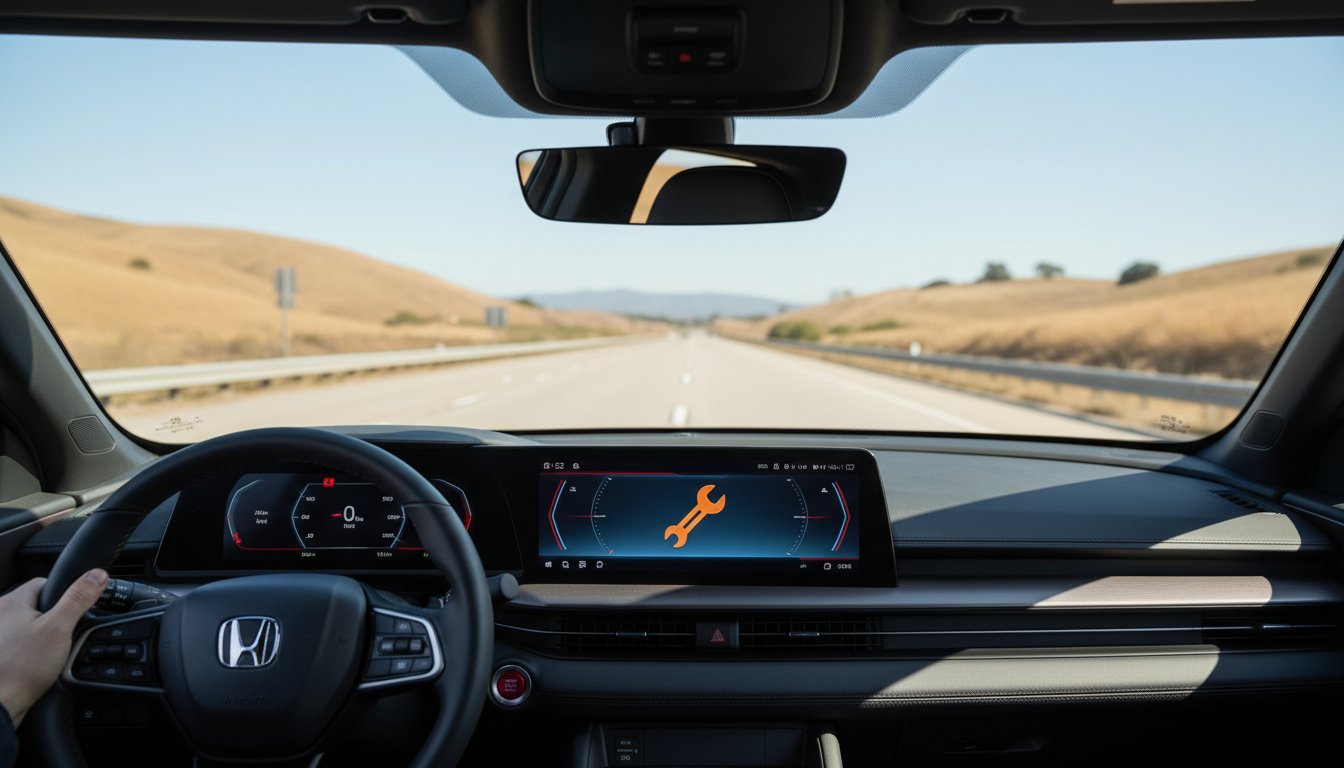
Imagine you’re merging onto the I-215 when a mysterious B16 alert flashes on your dashboard. It’s a moment of instant stress. You might wonder if your engine is in trouble or if you’re about to face a massive repair bill just to keep your factory warranty intact. We understand that feeling. At Diamond Valley Honda, we believe that staying on top of your Honda maintenance schedule by model shouldn't feel like a guessing game. Whether you’re driving a rugged Passport or an efficient Civic, your car is designed to tell you exactly what it needs through the Maintenance Minder system.
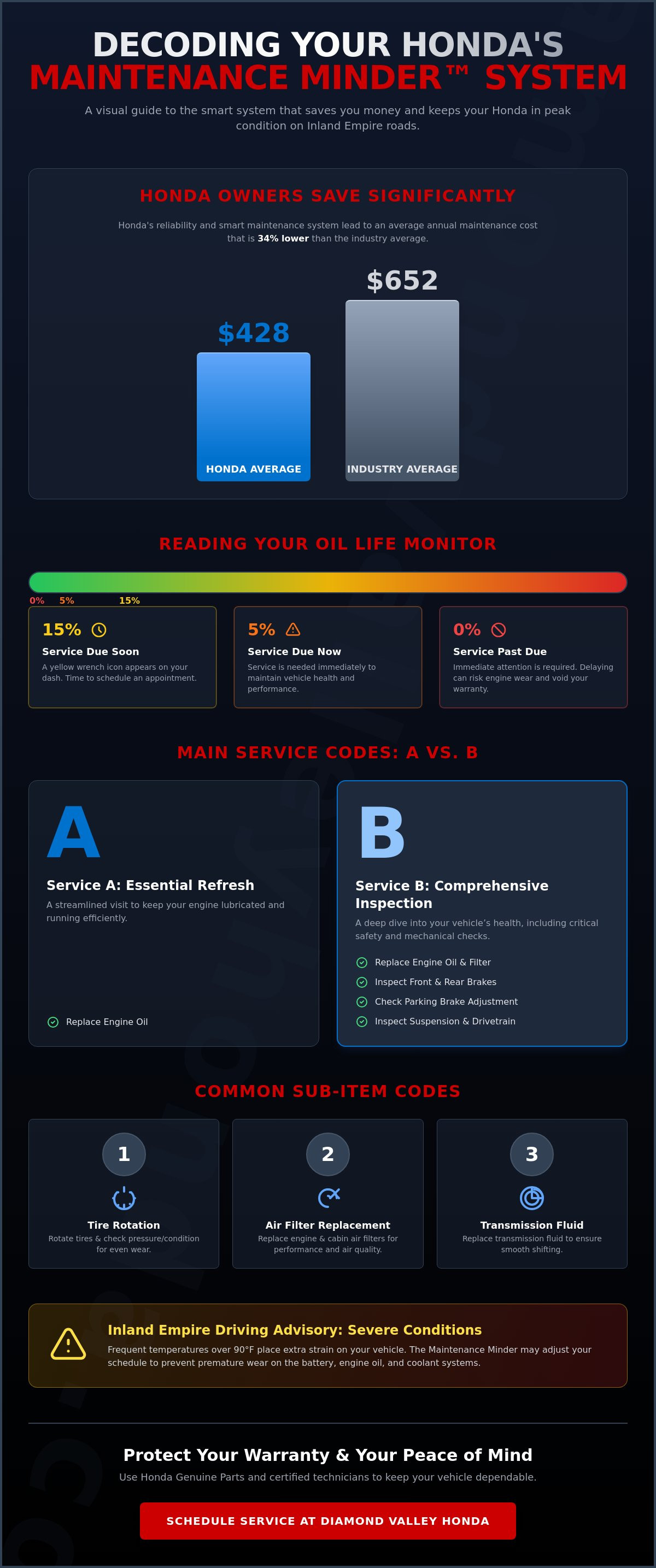
You want to know your vehicle is ready for the intense California heat without overpaying for services you don't need. It’s a smart goal, especially since Honda owners enjoy an average annual maintenance cost of just $428 compared to the $652 industry average. This 2026 guide simplifies your service journey by breaking down the specific codes and milestones for every model, from the CR-V Hybrid to the Ridgeline. You will learn how to decode sub-codes and understand why Inland Empire temperatures over 90°F require a more proactive approach. We’re providing a clear roadmap to keep your Honda dependable and your peace of mind secure.
Key Takeaways
- Learn how the Honda Maintenance Minder™ system tracks your driving habits to eliminate unnecessary oil changes and save you money.
- Decode the "A" and "B" service indicators to understand exactly when your Honda needs a simple fluid refresh versus a comprehensive safety inspection.
- Master your Honda maintenance schedule by model to identify specific needs for sedans versus the specialized AWD requirements of the Pilot and Passport.
- Discover why the Inland Empire's extreme heat makes your vehicle a candidate for "severe weather" maintenance to prevent battery failure and coolant issues.
- Ensure your factory warranty remains valid by using Honda Genuine Parts and expert technicians who understand your car's specific computer codes.
Understanding the Honda Maintenance Minder™ System
Your Honda is smarter than a simple calendar. Years ago, every driver followed a rigid 3,000-mile rule for oil changes, regardless of how or where they drove. Honda moved away from these fixed intervals to introduce the Maintenance Minder™ system, an onboard computer that monitors engine operating conditions in real time. This system ensures your car receives care when it actually needs it, reducing waste and saving you money on unnecessary visits. Standardized motor vehicle service used to rely on a one-size-fits-all approach, but this technology tailors care to your specific habits.
The system uses advanced sensors to track engine revolutions, ambient temperature, and trip duration. It automatically calculates whether you're driving in "Normal" or "Severe" conditions. For example, the triple-digit heat we often see in Hemet and Temecula puts more strain on your engine oil. The Maintenance Minder recognizes these high temperatures and adjusts your Honda maintenance schedule by model accordingly. It's critical that you only reset this system after a certified technician completes the required work; resetting it prematurely can lead to missed milestones and potential engine wear.
How to Read Your Oil Life Percentage
You can check your oil life at any time through your driver information interface. When the life reaches 15%, a yellow wrench icon appears, signaling it's time to schedule an appointment. By the time it hits 5%, the service is due immediately. If you reach 0%, your maintenance is officially past due, which can risk your factory warranty. Don't wait until you hit the zero mark to book your visit in Hemet, especially during the summer. The Maintenance Minder is a proactive algorithm that interprets engine sensor data to predict service needs rather than a simple odometer.
The Difference Between Main Items and Sub-Items
When the wrench icon appears, it's accompanied by an alphanumeric code. The "Main Items" are always represented by a letter. Code A typically signifies a straightforward engine oil replacement. Code B is more comprehensive, involving an oil and filter change along with a detailed inspection of the braking system and suspension. These codes help you understand your Honda maintenance schedule by model at a glance.
The numbers following these letters are "Sub-Items." These range from 1 to 7 and cover specific tasks like tire rotations, air filter replacements, or spark plug service. These sub-items are bundled with your main service to save you time and maximize the efficiency of your visit. Staying informed on these codes helps you follow expert automotive maintenance tips that keep your Honda running like new for years to come.
Decoding Honda Service Codes: A and B Explained
Service codes A and B are the core pillars of your Honda maintenance schedule by model. While they might look similar on your dashboard, they represent two different levels of care. Service A is a streamlined visit focused primarily on replacing your engine oil and performing a basic fluid check. It’s designed to keep your engine lubricated and efficient without keeping you in the service bay for hours. It’s a quick, essential touchpoint that ensures your Honda stays dependable for your daily commute.
Service B is a much more comprehensive deep dive into your vehicle’s health. In addition to an oil and filter change, our technicians perform a detailed inspection of the front and rear brakes, parking brake adjustment, and a thorough cleaning of the brake components. This level of detail is critical for older models frequently driven in San Jacinto and Perris, where heat and stop-and-go traffic can accelerate wear. Following NHTSA maintenance tips helps you stay ahead of these issues, ensuring your car is ready for the rigors of California road trips. If your dashboard shows a "B" service, you can schedule a multi-point inspection to get a full report on your car's condition.
Common Sub-Item Meanings You Should Know
Sub-items 1 through 3 handle the most frequent secondary needs. Sub-item 1 requires a tire rotation and pressure check, which is vital for maintaining even tread wear across all four tires. Sub-item 2 is particularly important for Inland Empire drivers; it involves replacing the cabin and engine air filters. Our local air can be dusty, and a clean filter ensures both your engine and your passengers breathe easier. Sub-item 3 focuses on transmission fluid. Fresh fluid ensures smooth shifting and protects the complex gears inside your Honda’s transmission from overheating.
Advanced Sub-Items: 4, 5, 6, and 7
As your Honda maintenance schedule by model progresses, you’ll encounter numeric codes for more intensive tasks. Sub-item 4 involves spark plug replacement and timing belt inspections, which are crucial for V6 engines found in the Pilot or Ridgeline. Sub-item 5 focuses on an engine coolant flush. With summer temperatures often exceeding 90°F, fresh coolant is your first line of defense against a breakdown. Sub-item 6 is for rear differential fluid on AWD models, while Sub-item 7 involves a brake fluid replacement. Fresh brake fluid ensures you maintain maximum stopping power, even when descending steep grades in the local mountains.
Honda Maintenance Schedule by Model: 2026 Breakdown
Your Honda maintenance schedule by model changes significantly based on the vehicle's drivetrain and weight. A Honda Civic Sedan following the "Sedan Cycle" focuses on standard engine health and tire longevity. These models are designed for efficiency, so their Maintenance Minder alerts usually prioritize oil life and cabin air quality. If you've upgraded to a model with Real Time AWD™, like those detailed in our Honda CR-V buyer's guide, your schedule adds requirements for differential fluid and transfer case inspections. These components are vital for maintaining traction during rainy California winters or off-road excursions.
The Honda Ridgeline requires a specialized approach. Because it's often used for hauling and towing, it demands more frequent transmission fluid checks and brake inspections. Heavy loads put extra heat into the gearbox, making Sub-item 3 a high priority. Meanwhile, the all-electric 2026 Honda Prologue removes the need for oil changes entirely. However, its maintenance isn't zero. The Prologue requires regular suspension checks and frequent tire rotations because the instant torque from electric motors can accelerate tread wear. Keeping up with these model-specific needs ensures your factory warranty remains intact.
Hybrid Maintenance: CR-V and Accord Hybrid Models
Honda hybrids don't necessarily need more frequent oil changes, but their internal combustion engines operate differently than traditional gas models. They cycle on and off frequently, which can lead to moisture buildup if the engine doesn't reach operating temperature on short trips. You'll also notice your brake pads last significantly longer. This is due to the regenerative braking system, which uses the electric motor to slow the car down while recharging the battery. Despite fewer brake jobs, the high-voltage battery pack requires its own cooling system checks to ensure it doesn't overheat in the Hemet sun.
The Honda Pilot and Odyssey: Family Hauler Maintenance
The Pilot and Odyssey are the heavyweights of the lineup. Carrying seven or eight passengers creates weight-related wear on tires and suspension bushings that smaller sedans don't experience. It's also vital to know your engine's internal architecture. Most Honda V6 engines, like those in the Pilot, use a timing belt that requires replacement around the 100,000-mile mark. In contrast, many four-cylinder models use a timing chain designed to last the life of the engine. You can find your specific engine details and service history by visiting the Official Honda Owners Site to stay ahead of these major milestones.
Inland Empire Driving: Severe Weather Maintenance Factors
Living in Hemet or Temecula means your vehicle faces environmental stressors that most standard service guides don't account for. Honda officially defines "severe conditions" as driving in temperatures over 90°F, extensive idling, or traversing dusty roads. Since our summer days frequently hit triple digits, your Honda maintenance schedule by model shifts from a suggestion to a necessity. High heat is the primary enemy of your battery and engine coolant. It accelerates chemical breakdown in the battery, often leading to a dead cell without warning. Our technicians often see coolant levels drop faster in this climate, which can lead to engine overheating if not monitored during a multi-point inspection.
Air quality is another local factor that demands attention. The Inland Empire is known for particulate matter and dust that can clog an engine air filter in as little as 10,000 miles. A restricted filter forces your engine to work harder, decreasing your fuel economy and straining the intake system. Similarly, the steep mountain grades in Banning and Beaumont put immense pressure on your braking system. Constant friction on these descents generates extreme heat, which can glaze your brake pads or warp rotors. If you frequently commute through these passes, your Maintenance Minder may alert you to service sooner than a driver on the flat coast.
Short Trips and Stop-and-Go Traffic
Idling in heavy Riverside traffic is surprisingly taxing on your engine oil. When you're stuck in stop-and-go conditions, your engine is running but you aren't covering miles, meaning the odometer doesn't reflect the actual wear occurring. There is also a "Short Trip" paradox to consider. Driving less than 5 miles per trip prevents your engine from reaching its full operating temperature. This allows moisture to accumulate in the oil, which degrades its lubricating properties much faster than a long highway cruise. Because of these local driving habits, the Maintenance Minder may trigger an oil change early in Southern California to protect your engine's internal components.
Protecting Your Honda's Exterior and Interior
The relentless California sun does more than just heat up the cabin; it actively damages your dashboard and upholstery. Using UV protectants and sunshades is vital for preserving your vehicle's resale value and structural integrity. While rain is infrequent here, it's often heavy when it does arrive. Old, dry-rotted wipers will fail you exactly when you need them most on the I-15. Investing in genuine Honda wipers ensures a perfect fit and clear visibility during our winter storms. Understanding these local nuances is part of the Honda service center benefits we provide to our neighbors. If you're worried about how the heat is affecting your car, book a battery and coolant test today to stay ahead of the summer surge.
The Diamond Valley Honda Service Advantage
Maintaining your Honda maintenance schedule by model requires more than a simple oil change. While a generic shop might reset your dashboard light to clear the wrench icon, our factory-trained technicians understand the specific logic behind every A12 or B16 code. This specialized expertise is the only way to ensure your Maintenance Minder system remains accurate throughout the life of your vehicle. We use advanced diagnostic tools that generic scanners often miss, allowing us to provide a level of precision that keeps your Civic or Pilot running as the engineers intended.
Your warranty depends on using the right components. We exclusively use Honda Genuine Parts for every repair and service. These parts are designed specifically for your model's tolerances, unlike third-party alternatives that may fit poorly or fail prematurely. Our commitment to transparency means we never suggest unnecessary work. We provide clear, no-fluff recommendations so you can make informed decisions about your car's care. Whether you're commuting from Murrieta or Menifee, our online scheduling tool makes it easy to find a time that fits your busy life.
Complimentary Multi-Point Inspections
Every visit includes a complimentary multi-point inspection to give you total peace of mind. We check your fluid levels, brake pad thickness, and tire condition to catch small issues before they leave you stranded on the 215 freeway. A tiny coolant leak might seem minor today, but in our 100-degree summers, it can quickly turn into a major engine repair. We provide a transparent digital report for every Hemet customer, using a simple color-coded system to show you exactly what's healthy and what needs attention. This proactive approach is how we ensure your Honda maintenance schedule by model stays on track without unexpected surprises.
Convenience for the Inland Empire
We know your time is valuable. Our dealership offers a comfortable waiting area with high-speed internet and local shuttle services to keep your day moving while we work on your vehicle. Choosing a local partner like Diamond Valley Honda means you're getting more than just a service appointment; you're getting a neighbor who cares about your safety and your car's longevity. We take pride in being your hometown Honda dealer and providing a hassle-free experience every time you walk through our doors. Schedule your Honda Maintenance in Hemet today and experience the Diamond Valley Difference for yourself.
Keep Your Honda Dependable for the Road Ahead
Mastering your Honda maintenance schedule by model is the most effective way to protect your investment and ensure long-term reliability. You now understand how the Maintenance Minder system monitors real-time conditions and why the Inland Empire's 90°F plus temperatures require a more proactive approach. By decoding those dashboard alerts and following model-specific milestones, you can avoid the stress of unexpected repairs and keep your factory warranty fully intact.
At Diamond Valley Honda, we have been serving Hemet and Temecula since our inception with a commitment to transparency and expertise. Our factory-trained technicians use only Genuine Honda Parts to maintain the precision engineering of your vehicle. Don't let a yellow wrench icon cause unnecessary worry. Take the next step toward peak performance and Schedule Your Certified Honda Service in Hemet today. We look forward to being your trusted local partner for every mile of your journey.
Frequently Asked Questions
What does the Honda Maintenance Minder code A1 mean?
Code A1 indicates that your vehicle requires an engine oil change and a tire rotation. The letter "A" is the main code for replacing the engine oil, while the numeric sub-code "1" signifies that it's time to rotate your tires and check their inflation pressure. This combination ensures your engine remains properly lubricated while promoting even tread wear across all four tires for better traction.
How often should I change the oil in my 2026 Honda CR-V?
For a 2026 Honda CR-V, oil changes are typically recommended every 7,500 to 10,000 miles under normal driving conditions. Your vehicle uses the Maintenance Minder system to track engine revolutions and ambient temperature to determine the precise moment for a change. If you frequently drive in the 90°F plus heat of the Inland Empire, the system will likely alert you to change your oil sooner to prevent heat-related oil degradation.
Does my Honda really need a Service B every time?
No, you don't need a Service B during every visit because your car will alternate between Service A and Service B based on its needs. While Service A is a quick oil replacement, Service B is a deeper safety inspection that includes brake cleaning and parking brake adjustments. Following the Honda maintenance schedule by model ensures you only perform these comprehensive inspections when your car's computer determines they are necessary.
Can I take my Honda to a non-dealer for scheduled maintenance?
You can use an independent shop, but it may complicate your factory warranty claims if the service isn't documented to Honda's specific standards. Certified dealers employ technicians who are trained by the manufacturer to understand the specific logic of the Maintenance Minder system. This ensures that every sub-code is addressed with genuine parts and that your vehicle's software remains up to date with the latest factory requirements.
What happens if I ignore my Honda maintenance codes?
Ignoring these codes can lead to reduced fuel efficiency, increased engine wear, and the potential for a denied warranty claim in the future. When your oil life reaches 0%, the additives that protect your engine are no longer effective at preventing friction and heat buildup. Overlooking these alerts often turns a routine fluid change into a costly repair that could have been avoided with a simple afternoon service visit.
How much does a typical Honda 30,000-mile service cost in Hemet?
While specific prices depend on your vehicle's needs, the average annual maintenance cost for a Honda is approximately $428 according to 2026 RepairPal data. This is significantly lower than the industry average of $652 per year for other brands. A 30,000-mile service often includes air filters and brake fluid flushes, so we recommend requesting a transparent, model-specific quote to get an exact figure for your vehicle.
Is the maintenance schedule different for Honda Hybrids?
Yes, the Honda maintenance schedule by model for hybrids includes unique requirements like high-voltage battery cooling system inspections. While the gasoline engine still requires traditional oil changes, the regenerative braking system typically allows your brake pads to last much longer than those on non-hybrid models. These specialized drivetrains require technicians who understand how to balance the service needs of both the electric motor and the gas engine.
How do I reset my Honda maintenance light after an oil change?
You can reset the light through your steering wheel controls or the infotainment screen by navigating to the "Maintenance Info" section. Press and hold the reset button for about 10 seconds until the display begins to blink, then select the items you wish to reset. You should only perform this reset after the actual service is completed; otherwise, you'll lose the accurate tracking of your vehicle's next critical service milestone.