
You're cruising toward the San Gorgonio Pass when a sudden amber glow on your dashboard turns a routine commute into a stressful ordeal. It's the moment every driver dreads, especially when you're miles from home on the I-10. You might wonder if your car is still safe to drive or if a "free" scan at a parts store is enough to find the real issue. Getting a professional check engine light diagnosis Beaumont is the most reliable way to protect your vehicle and your budget from the harsh Inland Empire heat. In this region, sensors are often stressed by the 2,600 foot elevation climb and triple digit summer temperatures.
We understand the anxiety that comes with an unknown warning light. You deserve a clear answer without the fear of being overcharged for parts you don't need. This article explains exactly what those dashboard codes mean and how our expert technicians identify the root cause to keep your vehicle reliable through 2026. You'll learn the difference between a simple code reading and a comprehensive diagnostic service that ensures your peace of mind on every local journey.
Key Takeaways
- Learn how to distinguish between a steady amber light and a critical flashing red warning to make safe driving decisions on the road.
- Discover why Beaumont's high summer temperatures and the steep grades of the San Gorgonio Pass frequently trigger electronic sensor faults.
- Understand why a professional check engine light diagnosis Beaumont is essential to find the "why" behind a trouble code and avoid the high cost of unnecessary repairs.
- Identify the five immediate steps you should take when a light appears, including a simple trick to verify if a loose gas cap is the culprit.
- See how factory-trained technicians use advanced diagnostic tools to ensure your vehicle remains dependable for your daily Inland Empire commute through 2026.
Understanding Your Check Engine Light in Beaumont, CA
The Malfunction Indicator Lamp, or check engine light, serves as your car’s primary way of communicating with you. When you’re driving through the San Gorgonio Pass in Southern California, this light isn't just a suggestion; it's a vital data point from your vehicle's On-Board Diagnostics (OBD-II) system. Since 1996, every car sold in the United States has used this standardized system to monitor everything from emissions to engine timing. Understanding the Check Engine Light helps you realize that while the light indicates a problem, it doesn't specify the exact part that failed. This is why a professional check engine light diagnosis Beaumont is necessary to pinpoint the issue before the 100-degree Inland Empire heat turns a minor sensor glitch into a major repair bill.
Ignoring that amber glow can lead to catastrophic engine failure, especially when your vehicle is already working hard to climb local elevations. Unlike the flat terrain found in Beaumont, Texas, our local Beaumont drivers face steep grades on the I-10 that put immense pressure on cooling systems and internal components. A small leak or a failing sensor might stay hidden on flat ground, but it will quickly become a major hazard under the stress of a California commute.
Steady vs. Flashing: When to Pull Over
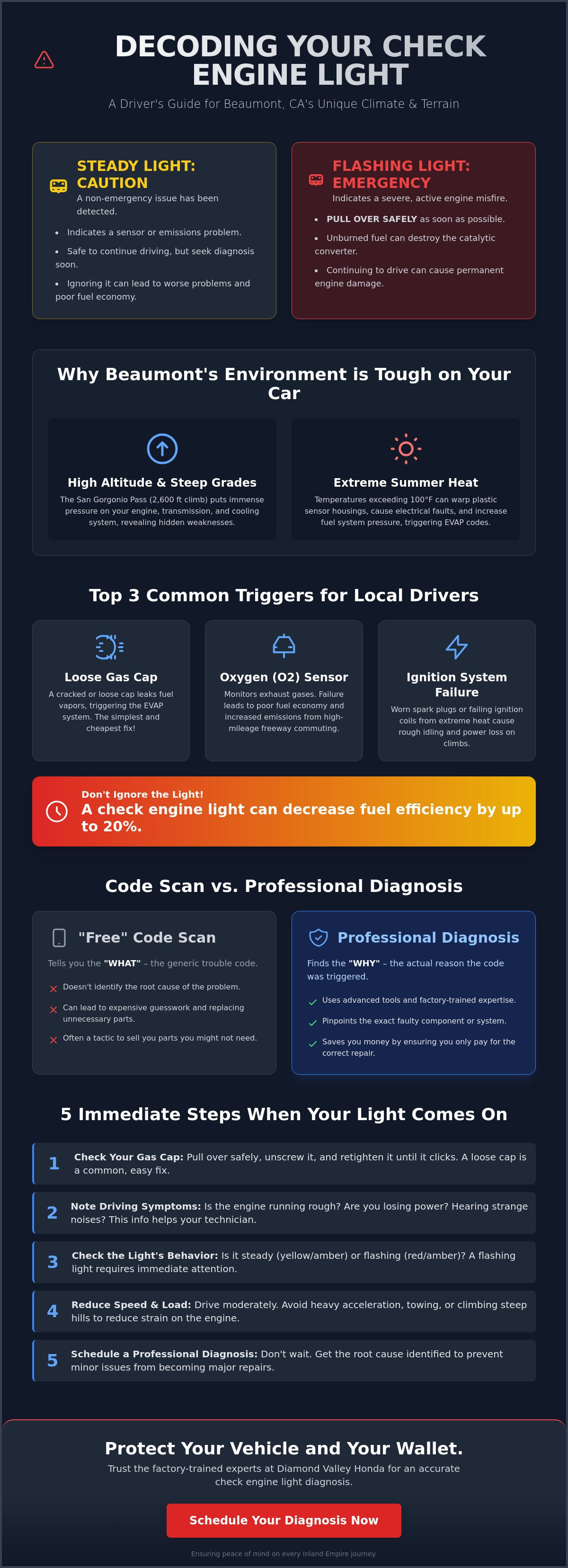
A steady amber light means the computer has detected a problem that needs attention soon. You can usually finish your drive, but you shouldn't ignore it for more than a day or two. However, a flashing light is a different story. If the light blinks while you're on the I-10, it indicates a severe engine misfire. This means unburned fuel is entering the exhaust system, which can overheat and destroy your catalytic converter in just a few miles. If you see a flashing light, pull over safely as soon as possible to prevent permanent engine damage. A flashing light is an emergency that requires immediate check engine light diagnosis Beaumont to save your powertrain.
Common Triggers for Beaumont Drivers
Living in the Inland Empire presents unique challenges for your vehicle. The steep grades and high elevations of the San Gorgonio Pass put extra strain on your powertrain, making certain components fail more frequently than they would in other climates. Common issues we see include:
- Loose Gas Caps: This is the simplest fix. A loose, leaking, or cracked cap allows fuel vapors to escape, triggering the evaporative emissions (EVAP) system.
- Oxygen Sensor Failure: These sensors monitor exhaust gases. High-mileage commuting on Southern California freeways often wears them out, leading to poor fuel economy.
- Ignition Coils and Spark Plugs: The extreme heat in Beaumont can cause ignition components to fail prematurely. This results in rough idling or a noticeable loss of power during steep climbs.
Ignoring these signs can lead to a 20% drop in fuel efficiency according to fuel economy data from the Department of Energy. Getting a professional diagnosis ensures you aren't just guessing which part to replace, saving you time and money in the long run.
Why Beaumont’s Climate and Terrain Trigger Engine Lights
Living in the San Gorgonio Pass means your vehicle faces a unique set of environmental challenges that drivers in flatter, cooler regions simply don't encounter. The Inland Empire is famous for its dramatic landscape, but those same features can be incredibly hard on your car's internal monitoring systems. When your dashboard illuminates, it's often a direct response to the specific stressors of our local geography. Seeking a professional check engine light diagnosis Beaumont helps identify if your car is reacting to these external factors or a more serious internal failure.
Heat and Sensor Sensitivity
Extreme Southern California heat is a primary culprit for sensor failure. When summer temperatures regularly exceed 100 degrees, the plastic housings that protect your engine's delicate electronics are pushed to their limits. These components can warp or crack over time, leading to intermittent electrical connections that trigger a warning light. High ambient temperatures also increase the pressure within your fuel system. This often results in evaporative emissions (EVAP) codes as the computer struggles to manage the increased rate of fuel evaporation. You might notice your light only appears during the peak heat of the afternoon, a common symptom of heat-related sensor fatigue. Edmunds, which provides a detailed list of common reasons for a check engine light, notes that environmental factors like these often lead to premature component wear.
Elevation and Engine Load
The geography of our region adds another layer of complexity. Climbing from the valley floor up toward Beaumont involves a significant elevation gain that forces your engine to work harder. This increased load raises internal cylinder pressures and temperatures, which can expose small leaks or weaknesses in your fuel delivery system that wouldn't be noticeable on flat ground. The steady climb from the valley floor up the San Gorgonio Pass acts as a relentless stress test for your engine's cooling and fuel systems. If your fuel pump or fuel injectors are slightly below their optimal performance, the demand of the I-10 incline will likely trigger a lean-burn code or a misfire warning.
Additionally, the Inland Empire's windy conditions often kick up fine dust and desert debris. This particulate matter can bypass older air filters and coat the delicate wire inside your Mass Air Flow (MAF) sensor. A dirty MAF sensor sends incorrect data to the engine computer, causing poor fuel economy and rough idling in stop-and-go traffic. If you've spent a lot of time commuting through the Pass lately, it's a smart move to check your vehicle's health with a professional team that understands these local conditions. Addressing these issues early prevents the "Pass effect" from turning a small sensor glitch into a breakdown on the shoulder of the freeway.
Code Scanning vs. Professional Diagnosis: What’s the Difference?
A common misconception among Inland Empire drivers is that the check engine light tells you exactly which part to replace. In reality, your car's computer identifies a symptom, not a solution. While a basic retail store scanner might pull a code in under 60 seconds, it lacks the depth required to understand the root cause. Choosing a professional check engine light diagnosis Beaumont ensures you aren't just reading a label but actually solving a mechanical puzzle. This distinction is the difference between a one-time fix and a recurring headache on your morning commute.
Think of your car's computer as a doctor. A code scan is like taking your temperature; it tells you that you have a fever, but it doesn't say if you have a cold or the flu. Our technicians use advanced equipment to look deep into the vehicle's history and current performance data. This level of detail is essential because modern vehicles, especially 2026 models, utilize complex software that monitors over 3,000 distinct trouble codes. Without this expertise, you're essentially guessing what your car needs.
The Limits of Free Code Scans
Retail store scanners often provide generic descriptions that miss manufacturer-specific nuances. A generic reader might show a P0420 code, which many people assume means they need a new catalytic converter. However, our technicians frequently find that this code is actually caused by a minor vacuum leak or a failing oxygen sensor. Misinterpreting these signals leads to the "parts cannon" approach, where owners waste money on high-cost components without fixing the underlying issue. A professional diagnosis protects your wallet by pinpointing the exact failure point the first time, preventing you from paying for parts you don't actually need.
The Diamond Valley Honda Diagnostic Process
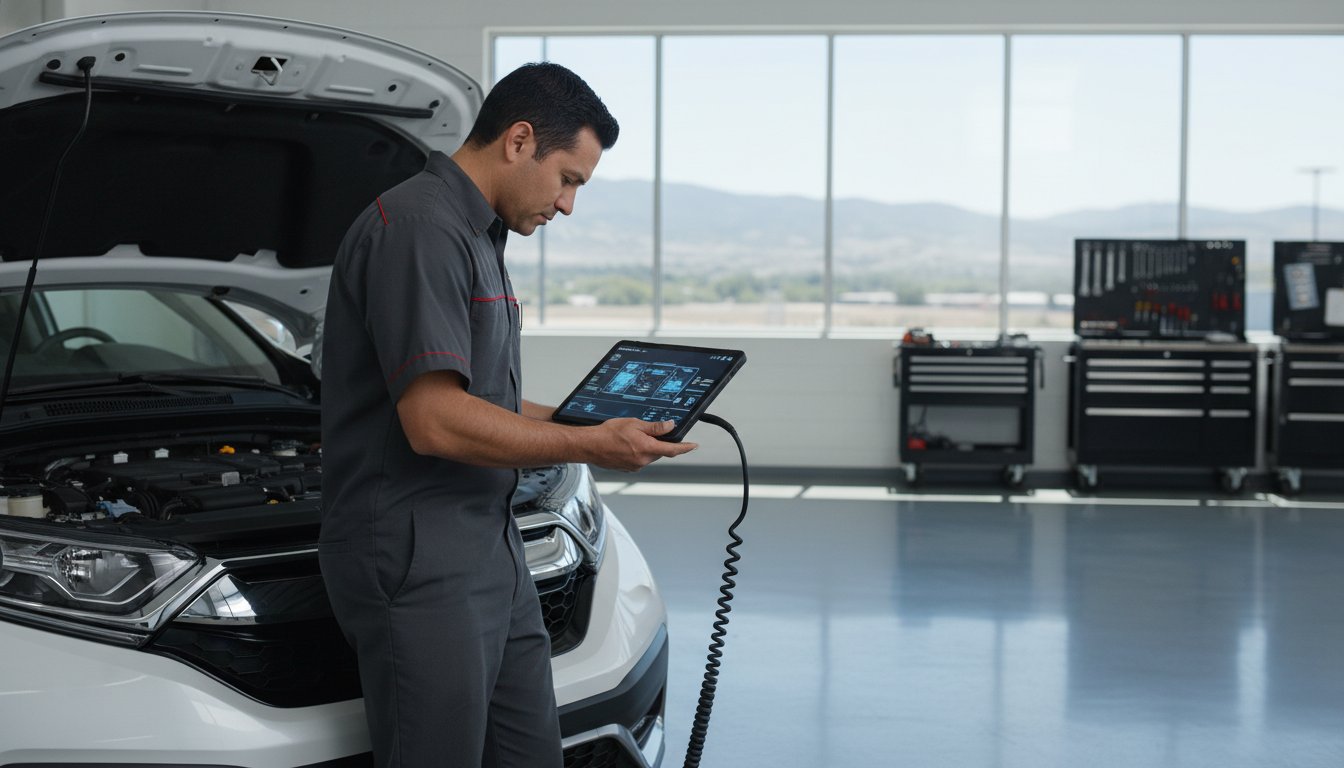
Our approach goes far beyond simply plugging in a tool. Our factory-trained technicians use proprietary software to view real-time data streams and sensor voltages while the engine is running. This allows us to see exactly how your car performs under load, simulating the stress of the San Gorgonio Pass. We combine this digital data with a physical inspection to look for frayed wires, cracked hoses, or loose connections that a computer scan simply cannot see. You can learn more about how our team handles these technical challenges at our Expert Honda Service Center. This comprehensive strategy, paired with a multi-point inspection, gives you a full picture of your vehicle's health and ensures your peace of mind on the I-10.
5 Steps to Take When Your Light Comes On in Beaumont
When that amber light appears on your dashboard while you're navigating the I-10 through the San Gorgonio Pass, don't panic. Take a breath and follow a logical plan. Since our local geography in Beaumont, California, puts unique stress on your vehicle, your immediate actions can prevent a minor sensor issue from becoming a major mechanical failure. Following these steps ensures you're prepared when you eventually seek a professional check engine light diagnosis Beaumont.
First, check your vital gauges. Is the engine temperature rising? Is the oil pressure light also on? If the car feels normal, your first "at-home" fix is checking the gas cap. A loose or damaged cap is the most common cause for an evaporative emissions system warning. Tighten it until it clicks, then drive for about 20 miles. It takes time for the vehicle’s computer to run its self-checks and turn the light off. If the light stays on after two full days of driving, you'll need a professional technician to investigate further.
The Gas Cap Check and Initial Observations
While you're driving, pay close attention to how the car behaves. Does the engine vibrate at stoplights? Do you hear a new whistling or knocking sound? You might experience "limp mode," which is a safety setting where the computer limits your speed and power to protect the engine. If your car feels sluggish or won't shift correctly, it's actively trying to save itself from damage. Write down these symptoms; this data is incredibly helpful for your technician to speed up the repair process. Detailed notes about when the light came on, such as during a steep climb or after a cold start, can cut diagnostic time significantly.
Scheduling Your Diagnosis Near Beaumont
Scheduling your service nearby is a smart logistical move. Choosing a facility close to the Beaumont and Banning area means you won't have to pay for a long-distance tow if the vehicle becomes undrivable. Before you arrive, gather your vehicle's recent service history. Knowing when you last had an oil change or spark plug replacement helps the service advisor narrow down the possibilities quickly. For more ways to keep your car running smoothly between visits, explore these automotive maintenance tips.
Don't let an unknown warning light ruin your week or leave you stranded in the Inland Empire heat. If your light is on, you should schedule a professional check engine light diagnosis Beaumont to get clear, transparent answers and keep your vehicle reliable for years to come.
Trust Diamond Valley Honda for Beaumont Check Engine Light Service
Finding a shop you can trust shouldn't be as stressful as the warning light itself. At Diamond Valley Honda, we've built our reputation on providing a professional check engine light diagnosis Beaumont drivers can rely on for honesty and precision. Our state-of-the-art facility is located just 15 minutes from the heart of Beaumont, making us a convenient partner for residents across the San Gorgonio Pass. You'll work with factory-trained technicians who specialize in the complex electronic systems found in modern vehicles, ensuring your car receives the expert care it deserves to stay reliable through 2026 and beyond.
We believe in total transparency. When we perform a diagnosis, we don't just hand you a list of repairs. We take the time to show you the actual data from our diagnostic tools and explain the "why" behind every recommendation. This approach eliminates the guesswork and helps you feel empowered about your vehicle's maintenance. Whether you're driving a brand-new Honda Civic or a dependable used vehicle from our inventory, our goal is to get you back on the Inland Empire roads with complete confidence. We treat every vehicle as if it were our own, focusing on long-term reliability rather than a quick, temporary fix.
Why Our Beaumont Neighbors Choose Us
Our commitment to the Inland Empire community has been the cornerstone of our business since we opened our doors in 1962. We understand that your time is valuable, so we offer a comfortable waiting area with complimentary Wi-Fi and shuttle services specifically for our Beaumont and Banning customers. If you need to get back to work or home while we perform your check engine light diagnosis Beaumont, our shuttle can drop you off within a 15-mile radius of the dealership. To ensure the light stays off for good, we only use genuine Honda parts and high-quality OEM components. These parts are designed specifically for your vehicle's architecture, providing a level of reliability that third-party aftermarket parts simply can't match. Using the right parts the first time protects your vehicle service contracts and maintains your car's resale value.
Book Your Diagnostic Appointment Today
Taking care of your car shouldn't disrupt your entire day. We offer easy online scheduling so you can pick a time that fits your busy life. If this is your first time visiting us, ask our service advisors about any current special offers for new guests. We're here to provide the "Diamond Valley Difference," combining big-city technical expertise with the friendly, neighborly service you expect from a local partner. Our team is ready to help you clear that dashboard light and get back to enjoying the drive. Schedule your check engine light diagnosis at Diamond Valley Honda today.
Drive with Confidence through the San Gorgonio Pass
Navigating the unique terrain of the Inland Empire requires a vehicle that's in peak condition. You now have the tools to distinguish between a minor sensor glitch and a critical engine misfire. Remember that while a simple code scan identifies a symptom, a professional check engine light diagnosis Beaumont uncovers the actual cause. This proactive approach saves you time and prevents unnecessary spending on parts that don't solve the problem. Our neighborly team is ready to provide the clarity and expert service you need to stay safe on the I-10.
At Diamond Valley Honda, our Honda Factory-Trained Technicians use Genuine OEM Parts to maintain the integrity of your vehicle. We've been a trusted partner for Beaumont drivers since 1962, offering transparent solutions that prioritize your safety. Whether you're commuting to work or heading out for a weekend adventure, we're here to ensure your car remains as dependable as the day you bought it. Schedule Your Expert Check Engine Light Diagnosis Near Beaumont Now. Let's get you back on the road with a clean dashboard and total peace of mind.
Frequently Asked Questions
Can I drive with my check engine light on in Beaumont?
You can typically continue driving if the light is steady amber, but you should schedule a professional check engine light diagnosis Beaumont as soon as possible. A steady light means the computer has detected a fault that could eventually lead to a breakdown or failed emissions test. However, if the light is flashing, you must pull over safely and stop the engine immediately. A flashing light indicates a severe misfire that can cause permanent damage to your engine and catalytic converter within just a few miles of driving on the I-10.
How much does a check engine light diagnosis cost in California?
Diagnostic fees in California typically range between $85 and $160 according to data from AAA. This fee covers the specialized labor required for a technician to connect advanced diagnostic equipment, analyze real-time data streams, and perform a physical inspection to verify the fault. While some retail stores offer a "free" code reading, that only identifies a symptom. A professional diagnosis at a service center ensures the root cause is identified correctly the first time, preventing you from paying for parts you don't actually need.
Why did my check engine light come on after I got gas?
A loose, cracked, or improperly tightened gas cap is a leading cause of the light appearing immediately after refueling. The vehicle's computer monitors the pressure in your fuel system to ensure vapors aren't escaping into the atmosphere. If the cap isn't sealed, the system detects a leak and triggers a warning. If you recently visited a station in the San Gorgonio Pass, pull over and tighten the cap until it clicks. It may take 20 to 40 miles of driving for the computer to reset the light once the seal is restored.
Will my car pass a California smog check with the engine light on?
No, your vehicle will automatically fail a California smog inspection if the check engine light is illuminated at the time of the test. The California Bureau of Automotive Repair (BAR) rules state that any active emissions-related fault codes result in an immediate failure. You must have the underlying issue repaired and then drive the vehicle for a specific "drive cycle" to allow the computer to verify the fix. Only after the system monitors return to a "ready" status will the vehicle be eligible to pass its smog certification.
Does a check engine light always mean an expensive repair?
Not at all, as many triggers are simple and relatively affordable to resolve. According to the 2023 CarMD Vehicle Health Index, the most common repair is replacing a faulty oxygen sensor, followed by tightening or replacing a gas cap. While these aren't major engine overhauls, ignoring them can lead to a 40% decrease in fuel economy according to EPA estimates. Addressing a check engine light diagnosis Beaumont early prevents minor sensor issues from escalating into high-cost repairs like catalytic converter replacement.
How do I reset my check engine light after a repair?
The light should turn off automatically after you complete a full "drive cycle," which usually involves 50 to 100 miles of mixed city and highway driving. This allows the engine's computer to re-run all its self-tests and confirm that the previous fault is no longer present. While you can manually clear codes with a handheld scanner, the light will return almost instantly if the repair was unsuccessful. It's best to let the vehicle's internal monitors confirm the repair naturally to ensure your car is truly ready for the road.
What is the difference between a check engine light and a service required light?
A check engine light indicates a malfunction in the engine, transmission, or emissions system that requires immediate attention. In contrast, a "service required" or "maintenance mind" light is a pre-programmed reminder for routine upkeep like oil changes or tire rotations. One signals that something is broken, while the other is part of your preventative maintenance schedule. If you see the engine-shaped icon, it's time for a professional diagnosis rather than just a standard oil change.
Can high heat in the Inland Empire cause my engine light to turn on?
Yes, sustained temperatures above 100 degrees in the Beaumont area put extreme stress on electronic sensors and plastic components. High heat increases the pressure inside your fuel tank, which can cause sensitive evaporative emissions sensors to trigger a code if there's even a microscopic leak. Additionally, extreme temperatures can cause older batteries to struggle, leading to low-voltage conditions that confuse the engine's computer and trigger "ghost" codes that weren't there during cooler months.